Why AI Search Is Changing Digital Marketing Attribution — And What Businesses Need to Do Now
For years, digital marketing felt measurable in a relatively straightforward way.
A person searched on Google, clicked a result, visited a website, filled out a form, called the business, or made a purchase. From there, marketers could look inside Google Analytics, Google Ads, Search Console, or a CRM and make a reasonable assumption about which channel deserved credit.
That world is changing fast.
AI-powered search experiences, Google AI Overviews, ChatGPT, Perplexity, Gemini, and other answer engines are reshaping how people discover businesses, research solutions, and make buying decisions. The issue is not that traditional SEO or paid advertising no longer work. They absolutely still matter. The issue is that the customer journey is becoming harder to track because more decisions are being influenced before someone ever clicks your website.
This creates a major challenge for business owners and marketers: your marketing may be influencing more people than your reports show.
Google has said that AI Overviews and AI Mode are designed to help users understand complicated topics faster and discover helpful links, while also noting that standard SEO best practices remain relevant for appearing in AI search experiences. At the same time, studies and industry coverage have shown that AI-generated answers can reduce traditional click behavior in many search results, which means marketers need to rethink how they measure success.
The businesses that adapt early will have a major advantage. The ones that keep judging success only by clicks, sessions, and last-click attribution may slowly lose visibility without realizing what is happening.
The Customer Journey Is No Longer Linear
The old customer journey was easier to understand because most users moved through a predictable path. They searched, clicked, compared options, and converted.
Today, that journey is fragmented.
A potential customer might first see your company mentioned in an AI Overview. Then they might ask ChatGPT to compare service providers. Later, they might watch a YouTube video, search your company name on Google, read reviews, and finally convert through a branded search ad or direct website visit.
From an analytics standpoint, that final conversion might be credited to direct traffic, organic branded search, or paid search. But that doesn’t tell the full story.
The real influence may have started much earlier through:
An AI-generated answer
A brand mention on another website
A helpful blog post
A review profile
A YouTube video
A social media post
A comparison search
This is where traditional attribution starts to break down. The final click gets the credit, but the earlier influence shaped the decision.
For businesses investing in SEO, content, paid ads, and social media, this means one thing: your reports may be undercounting the impact of your marketing.
Why Traditional Attribution Is Becoming Less Reliable
Most businesses still rely heavily on last-click attribution. This model gives credit to the final channel that drove the conversion.
That worked better when search journeys were simple. But in today’s digital environment, it can be misleading.
For example, someone may discover your company through an article, see your brand mentioned in an AI-generated search result, revisit your website several days later, and then click a branded Google Ad before converting. If you only look at last-click attribution, you may think the branded paid search campaign deserves all the credit.
In reality, SEO, content, AI visibility, and brand authority all helped move that person toward conversion.
This matters because bad attribution leads to bad budget decisions. If marketers only fund the channel that gets the final click, they may accidentally cut the channels that create demand in the first place.
That is why businesses need to look beyond surface-level reporting and start measuring a broader set of indicators, including branded search growth, assisted conversions, returning users, CRM source data, and lead quality.
AI Search Is Changing How People Discover Brands
AI search is not just another search result format. It changes the way people consume information.
Instead of reviewing ten blue links, users can now get summarized answers directly in the search experience or through conversational AI tools. This can reduce the need to click multiple websites, especially for informational queries.
Pew Research Center analysis, reported by Search Engine Land, found that users clicked traditional results less often when AI summaries appeared, with traditional result clicks occurring in 8% of searches with an AI summary compared with 15% on pages without one. Google has also continued expanding AI Overviews and AI Mode, stating that AI Overviews were used by more than a billion people as of its 2025 announcement.
For marketers, the takeaway is not “SEO is dead.” That’s lazy thinking.
The real takeaway is that visibility is changing.
Your brand may influence a user without receiving the click. Your content may support an AI-generated answer without driving the same traffic it once did. Your authority may shape buying decisions before a user ever lands on your site.
That means businesses must optimize not only for rankings, but also for being understood, cited, trusted, and remembered.
For Orange SEO, this connects directly to the future of AI SEO, GEO, and AIO services, where the goal is not just ranking in traditional search, but being visible across AI-driven discovery environments.
The Rise of “Invisible Influence”
One of the biggest marketing challenges right now is the rise of invisible influence.
Invisible influence happens when your brand plays a role in a buying decision, but your analytics platform does not clearly show it.
This can happen when someone:
Reads an AI-generated answer that mentions your brand
Sees your company referenced in a third-party article
Compares your business through ChatGPT or Gemini
Watches a video but converts days later through another channel
Searches your brand name after multiple earlier touchpoints
None of these interactions may receive proper credit in a basic analytics report.
That does not make them unimportant. In fact, they may be the reason the person trusted you enough to convert later.
This is why marketers need to stop treating direct traffic, branded search, and last-click conversions as isolated events. Often, they are the result of earlier brand-building activity.
This is especially important for SEO. A strong organic strategy does more than generate clicks. It builds authority, educates buyers, and creates the content ecosystem that AI systems, search engines, and prospects use to evaluate your business.
You can see this broader approach reflected in Orange SEO’s work around AI Citation SEO, where the goal is to become a trusted source for both search engines and AI-generated answers.
Brand Authority Matters More Than Ever
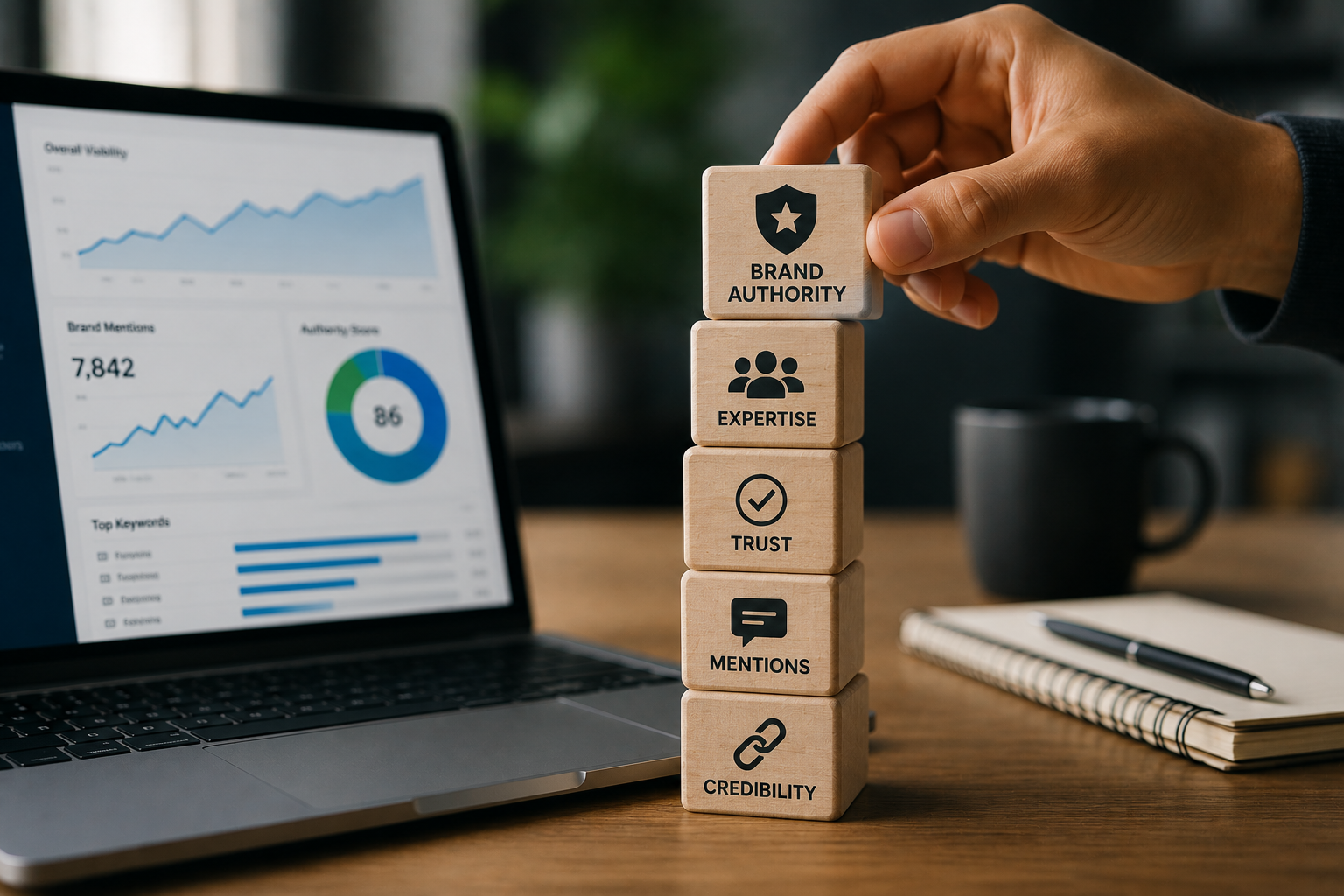
In the old SEO world, businesses often focused narrowly on keywords and rankings. Those still matter, but they are no longer enough by themselves.
AI systems and modern search experiences rely heavily on signals of trust, consistency, and authority. They need to understand who your business is, what you specialize in, where you operate, and why your information is credible.
That means your digital footprint matters.
Your website content, service pages, blog posts, reviews, case studies, structured data, backlinks, social profiles, and third-party mentions all contribute to how your brand is interpreted online.
If your business has thin content, inconsistent information, weak authority, and limited topical depth, you are making it harder for both search engines and AI systems to understand why you should be surfaced.
This is where traditional SEO and AI SEO overlap. Google’s own guidance says there are no special requirements for AI Overviews beyond following strong SEO fundamentals, which reinforces the point that the basics still matter.
The difference is that the standard for quality is getting higher.
Businesses need to build deeper content ecosystems around their services, not just publish one-off blog posts. They need to answer real questions, demonstrate experience, and make their expertise easy for both users and machines to understand.
This is why ongoing SEO services and strategic content creation are becoming even more important in the AI search era.
Paid Ads Still Matter — But They Need Better Data
Some marketers assume that if organic attribution becomes harder, they can simply shift more budget into paid ads.
That can help, but only if paid campaigns are optimized correctly.
The problem is that paid platforms are also becoming more dependent on high-quality data. Google Ads, Meta Ads, LinkedIn Ads, and Microsoft Ads all rely heavily on conversion signals to optimize performance. If the platform is only told that a form fill is a conversion, it will optimize for people likely to fill out forms.
That does not always mean they are likely to become customers.
This is why first-party data and CRM integrations are now critical. Businesses should be feeding platforms real outcomes, such as qualified leads, booked appointments, closed deals, and revenue values.
When your CRM is connected to your ad platforms, your campaigns can learn from what actually happened after the lead came in. This helps improve lead quality, not just lead volume.
That is a major difference.
For example, two campaigns might both generate 50 leads. But if one campaign generates five closed deals and the other generates none, the ad platform needs to know that. Otherwise, it may continue sending budget toward the wrong audience.
This is why businesses running Google Ads and Microsoft Ads or social media advertising need to think beyond clicks and basic conversions. The future of paid media is not just campaign setup. It is data quality, conversion quality, and CRM feedback loops.
First-Party Data Is Becoming a Marketing Advantage
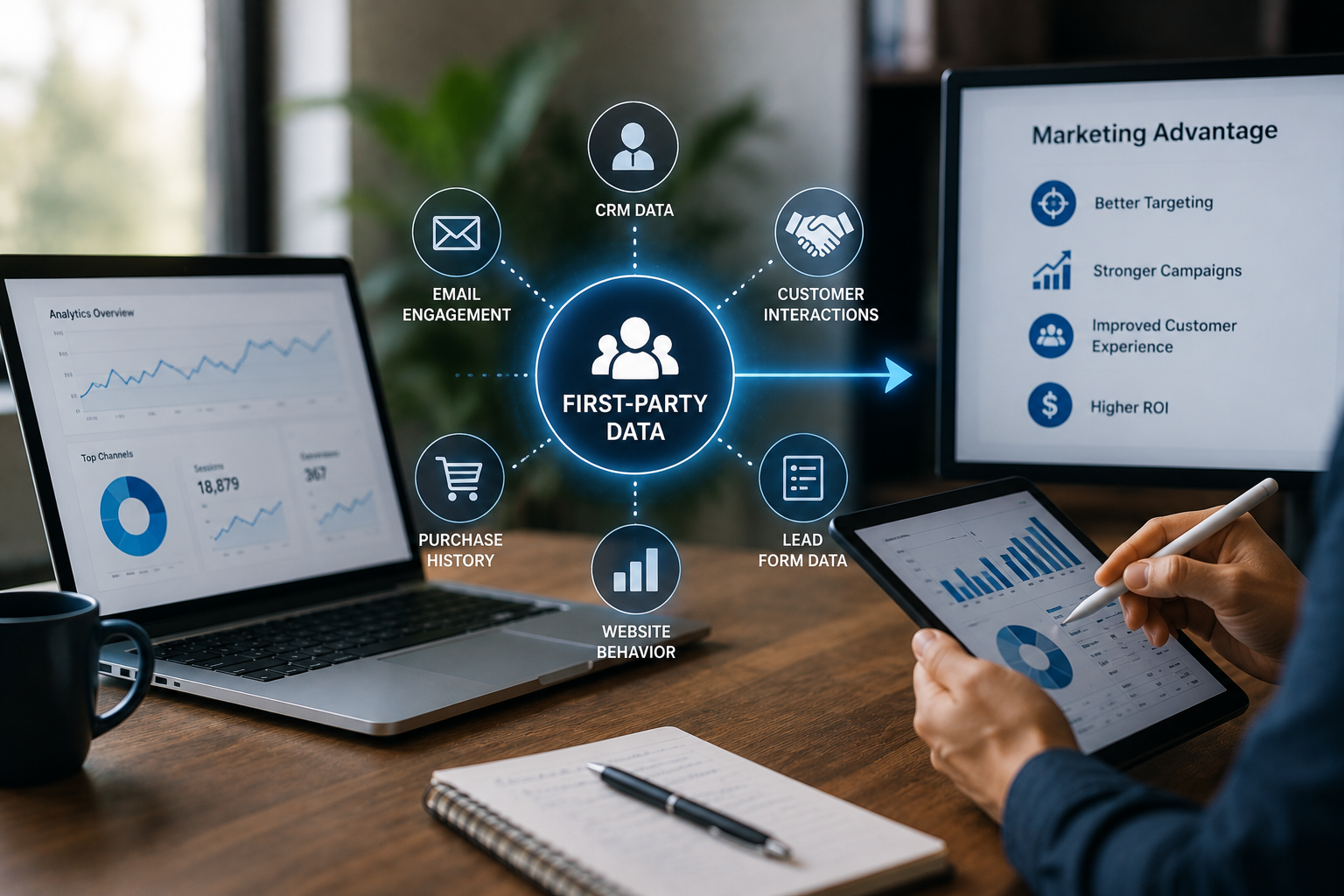
As privacy changes continue and tracking becomes less reliable, first-party data becomes more valuable.
First-party data is information your business collects directly from prospects and customers. This includes CRM data, email lists, customer records, sales pipeline stages, lead quality scores, and purchase history.
This data helps marketers understand what actually drives revenue.
Instead of relying only on platform-reported metrics, businesses can use CRM data to answer better questions:
Which campaigns are producing qualified leads?
Which keywords lead to real sales conversations?
Which audiences turn into closed deals?
Which channels drive the highest lifetime value?
When you know those answers, you can make smarter decisions across SEO, paid ads, CRO, and content strategy.
This also improves targeting. Customer lists and CRM data can be used to create better remarketing audiences, lookalike audiences, exclusion lists, and conversion signals.
HubSpot’s 2025 AI trends report notes that AI is now embedded into marketing workflows for many professionals, which makes clean data and connected systems even more important for marketers trying to use automation effectively.
The businesses that organize their data now will be in a much stronger position than those still relying on disconnected spreadsheets, incomplete tracking, and last-click reporting.
CRO Becomes More Important When Traffic Is Harder to Earn
If AI search reduces clicks for certain queries, then every website visit becomes more valuable.
That makes conversion rate optimization even more important.
You cannot afford to waste good traffic on weak landing pages, unclear messaging, slow load times, or confusing calls to action. If fewer users are clicking through from informational searches, the users who do land on your site need a clear path to conversion.
Strong CRO helps make sure your website does its job.
That means your pages should clearly communicate:
Who you help
What problem you solve
Why your company is credible
What action the user should take next
This is where SEO and CRO should work together. SEO brings visibility. CRO turns that visibility into leads and revenue.
For businesses that want to get more value from their existing traffic, Orange SEO’s article on conversion rate optimization is a strong supporting resource.
What Businesses Should Do Right Now
The businesses that win in this new environment will be the ones that stop treating each marketing channel as a separate silo.
SEO, paid ads, content, CRO, social media, analytics, and CRM data all need to work together.
Instead of asking only, “Which channel got the lead?” marketers need to ask, “What combination of visibility, trust, targeting, and follow-up created the customer?”
That shift is important.
Businesses should focus on building authority across their website, improving content depth, strengthening brand signals, connecting CRM data to ad platforms, and measuring lead quality instead of just lead volume.
They should also pay close attention to branded search demand. If more people are discovering your brand through AI tools or off-site content, branded search may increase even if non-branded organic traffic is flat.
That does not mean SEO failed. It may mean SEO and authority-building are influencing demand in ways that traditional reports do not fully capture.
The Future of Digital Marketing Is Not Less Measurable — It’s Differently Measurable
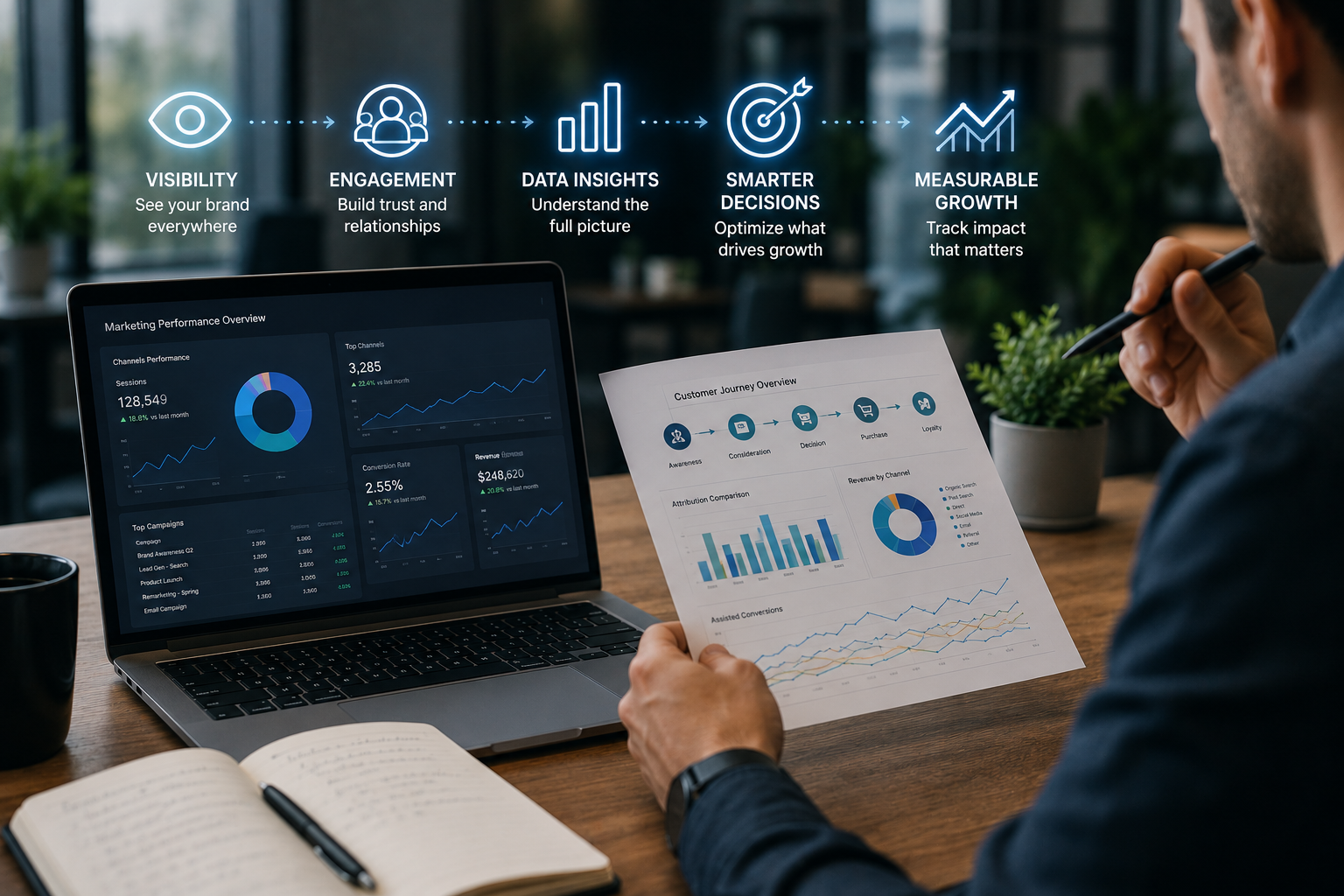
It is easy to look at the rise of AI search and assume marketing measurement is getting worse.
A better way to think about it is that measurement is becoming more complex.
The old model rewarded simple channel attribution. The new model rewards full-funnel visibility.
Businesses need to measure:
Rankings and AI visibility
Branded search demand
Assisted conversions
Lead quality
CRM pipeline impact
Revenue by channel
Customer acquisition cost
Lifetime value
That is a more complete picture of marketing performance.
It also gives businesses better insight into what is actually working.
Final Thoughts
AI search is not destroying digital marketing. It is exposing the weaknesses in outdated marketing measurement.
Businesses that rely only on clicks, sessions, and last-click attribution will struggle to understand what is really driving growth. Businesses that build authority, connect their data, improve their conversion paths, and measure revenue outcomes will be much better positioned.
The future belongs to marketers who understand that visibility is no longer limited to traditional rankings. AI answers, brand mentions, content authority, paid media data, CRM signals, and conversion quality all matter.
If your marketing reports are only showing you the final click, you are probably missing the bigger story.
And in today’s digital landscape, that bigger story is where the real opportunity is.
The Final Click Is Lying: AI Search Changed Everything Video:
FAQ
What is AI search in digital marketing?
AI search refers to search experiences that use artificial intelligence to generate summarized answers, recommendations, or conversational responses. Examples include Google AI Overviews, Google AI Mode, ChatGPT, Perplexity, and Gemini.
Why is AI search changing attribution?
AI search changes attribution because users may discover and evaluate brands inside AI-generated answers before ever clicking a website. Traditional analytics tools often do not capture that early influence.
Is SEO still important with AI Overviews?
Yes. SEO is still important because AI search systems rely on high-quality content, authority signals, structured information, and trusted sources. Google has stated that standard SEO best practices remain relevant for AI search features.
Why are clicks not the only metric that matters anymore?
Clicks are still important, but they no longer show the full impact of marketing. Brand visibility, AI mentions, assisted conversions, lead quality, and revenue influence are also important performance indicators.
How can businesses improve attribution in the AI search era?
Businesses can improve attribution by connecting CRM data, tracking lead quality, monitoring branded search demand, reviewing assisted conversions, and measuring revenue outcomes instead of relying only on last-click reporting.
How does first-party data help digital marketing?
First-party data helps marketers understand which campaigns, audiences, and keywords generate real customers. It also helps paid platforms optimize toward qualified leads and revenue instead of basic form submissions.