AI Citation SEO: How to Become a Source for AI Answers
Artificial‑intelligence (AI) search engines are transforming how people discover information online. Instead of showing a page full of blue links, tools such as Google’s AI Overviews, Bing Copilot, Perplexity and ChatGPT synthesize answers from across the web and cite only a handful of sources. For businesses, that means it’s no longer enough to rank on the first page – you need to be cited.
In this comprehensive guide we’ll explain what AI citation SEO is, why citations matter more than rankings, how AI models decide who to cite, and the strategies you can use to make your site a preferred source. Whether you’re an SEO veteran or just starting to explore AI search, this article will help you build a plan to earn valuable mentions in AI answers and future‑proof your visibility.
What is AI Citation SEO?

AI citation SEO (sometimes called generative engine optimization or answer engine optimization) is the practice of making your content easy for AI systems to recognize, extract and cite. In traditional SEO the goal is to rank on page one of Google, but AI search engines like ChatGPT and Gemini don’t display ten blue links. Instead, they generate a concise answer and link to the sources they used.
Appearing in those citations requires both traditional SEO fundamentals and new tactics that help AI systems understand and trust your content. Semrush describes AI SEO as the practice of optimizing your content so it appears in AI‑powered search results as citations or mentions. AI citation SEO goes a step further by focusing on the factors that make your brand the source AI engines choose to quote.
Why AI Citations Matter More Than Rankings
In the past the goal of SEO was to secure one of the top organic positions and earn clicks. AI search has changed this paradigm. When an AI engine answers a query it presents a synthesized response and cites only a few trusted sources. If you’re in those citations, users see your brand as an authority; if not, you’re invisible. Hashmeta explains that AI citations provide “pre‑qualified trust before site visits” and can lead to higher conversion rates and stronger brand authority.
Adoption of AI search is accelerating. Research from Semrush found that Google triggered AI Overviews for 13.14% of U.S. desktop searches in March 2025. An AP‑NORC poll cited by Semrush reports that 60% of Americans use AI to find information at least some of the time. As more users rely on AI assistants, earning citations becomes essential for maintaining visibility and credibility.
How AI Models Decide What to Cite
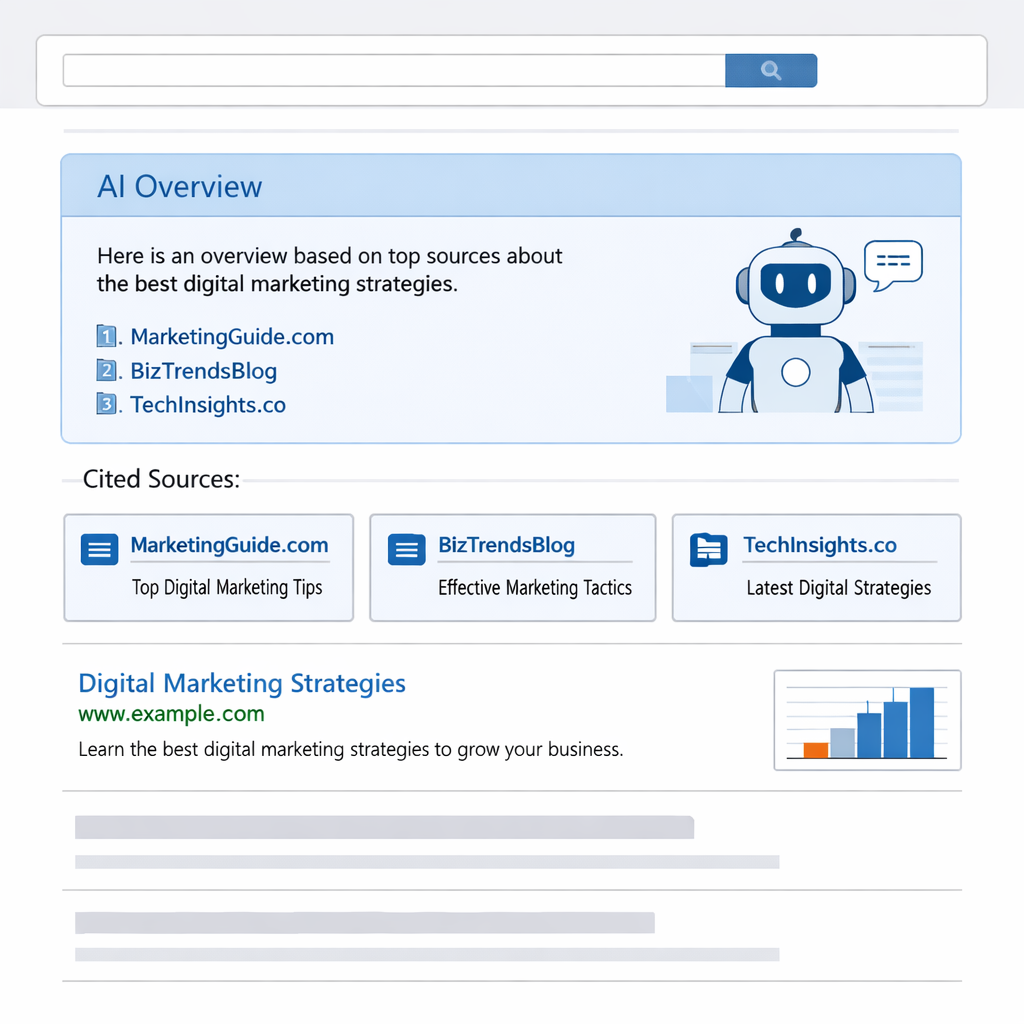
Different AI engines use different signals to choose their sources. Respona’s research notes that Google’s AI Overviews heavily pull from pages that already rank in the top 10 search results. Ranking high in traditional search is therefore still important for educational queries. However, chatbots like ChatGPT, Perplexity and Bing Copilot rely on broader patterns across the web, prioritizing brands that are repeatedly mentioned in listicles, industry blogs and review platforms.
Hashmeta identifies three core criteria that AI systems evaluate when selecting sources: authority, accuracy, and accessibility. Authority comes from domain credibility, a strong backlink profile and brand recognition. Accuracy is determined by content quality, factual consistency and referencing reliable data. Accessibility refers to how easily AI crawlers can fetch and parse your content – well‑structured pages with clear headings, short paragraphs and proper schema make extraction easier.
AI engines also evaluate your entire domain’s topical authority rather than just individual pages. A site that publishes deep, consistent coverage on a subject is more likely to be cited than one with scattered posts. Recency matters as well – AI systems favor up‑to‑date information. Finally, off‑site signals such as unlinked brand mentions, reviews and social media discussions influence whether AI models view your brand as trustworthy.
Strategies to Become a Source for AI Answers
1. Create Citation‑Worthy Content
The foundation of AI citation SEO is content that answers questions directly and completely. Google’s AI Overviews often pull from pages that already rank well, so you still need to target clear informational keywords and practice solid SEO. Structure your pages so AI systems can easily extract key information:
Front‑load your answers. Place the definition or core answer in the first sentence of each section. Semrush notes that front‑loading makes it easier for AI and search engines to find the answer and use it as a citation.
Use descriptive headings and concise paragraphs. Break your content into scannable sections with clear H2/H3 headings, three‑sentence paragraphs and bulleted lists. AI systems parse content in segments; a clear hierarchy helps them identify and attribute specific information.
Include definitions, statistics and quotes. Hashmeta recommends using definition paragraphs, statistical call‑outs and quote blocks so AI can extract quick answers while understanding the broader context.
Cite credible sources and add original research. Referencing research studies and industry reports strengthens your content’s credibility, while publishing proprietary data or case studies creates unique information that AI may prioritize.
2. Build Topical Authority and Topic Clusters
AI engines evaluate domain‑level expertise. Focus your content strategy on a few core topics and develop pillar pages and topic clusters. Semrush suggests creating a main page on a broad topic and sub‑pages that dive into specific subtopics, then interlinking them. For example, if you offer AI SEO services, you might create a pillar page on generative engine optimization and supporting articles on optimizing for ChatGPT, AI search versus traditional search, tracking AI traffic and more.
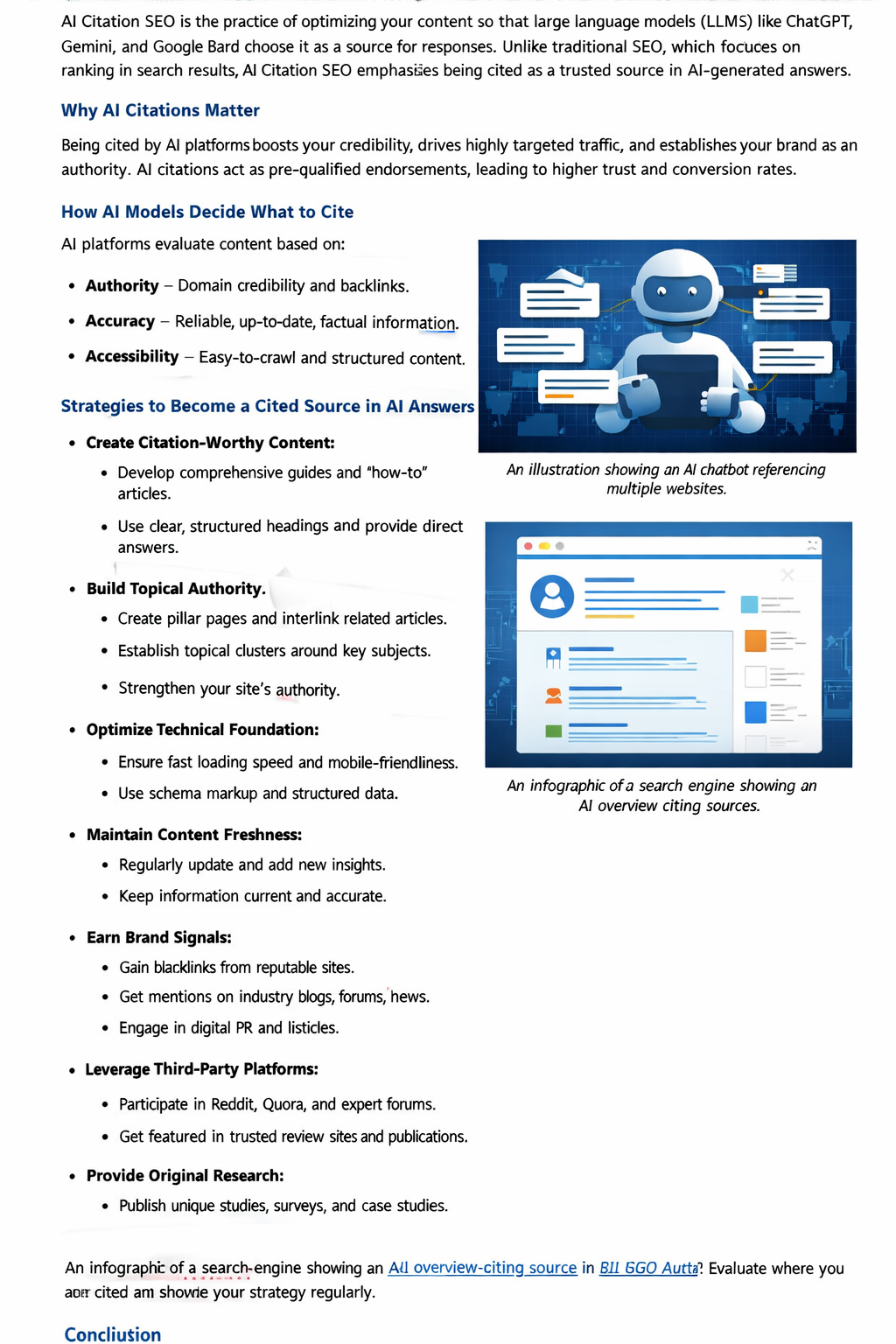
Internal linking within clusters signals to AI that your site has comprehensive coverage, increasing the likelihood of citation. To learn more about building clusters, see our guide on Generative Engine Optimization.
3. Strengthen Technical Foundations and Accessibility
Robust technical SEO improves both human user experience and AI crawler accessibility. Semrush advises fixing broken links, improving page speed, ensuring mobile‑friendliness, avoiding duplicate content and making navigation simple. Hashmeta adds that server‑side rendering, structured data markup, optimized site performance and logical URL structures make your content easier for AI to crawl and parse.
Additionally, use schema markup (e.g., Article and FAQ schema) to provide context and use the dateModified property to signal updates. Accessibility also encompasses alt text for images and transcripts for videos – these help AI understand multimedia content.
4. Keep Content Fresh and Relevant
AI search engines show a preference for recently updated pages. Review your most important pages quarterly and refresh them with new statistics, recent developments and updated examples. Semrush recommends including a “Last updated” date and using dateModified schema to highlight revisions. Even small updates signal that your content is current and reliable.
5. Build Brand Authority and Signals
Authority is built off‑site as much as on‑site. A robust backlink profile and consistent brand mentions across third‑party platforms tell AI models that others trust you. Hashmeta emphasises earning links from industry publications, research institutions and government websites, and notes that topical relevance matters more than sheer quantity.
Brand mentions in forums, social media and industry discussions – even without links – contribute to perceived authority. Participate authentically in communities like Reddit, Quora and LinkedIn to answer questions and share expertise.
6. Secure Listicle Placements and Third‑Party Coverage
Respona’s framework highlights that commercial‑intent queries in AI search often rely on consensus across multiple sources. Getting your brand into high‑quality listicles, comparison articles and review platforms increases the likelihood that AI models will pick you up. Dominating third‑party authority sites – such as respected industry blogs and news outlets – is one of Search Engine Land’s top recommendations for enhanced AI visibility. Target industry‑specific hubs and review sites like G2, Capterra or specialized directories for your niche.
7. Engage in Digital PR and Community Participation
AI citation optimization is a distribution strategy as much as a content strategy. Consistently earning placements and mentions across the web helps your brand stand out. Semrush recommends publishing original research, contributing expert commentary through services like HARO or Qwoted, guest posting on relevant publications and participating in forum discussions. Search Engine Land advises engaging in relevant communities like Reddit and Quora and building a balanced ecosystem of mentions across authoritative platforms.
8. Demonstrate Expertise, Experience, Authoritativeness and Trust (E‑E‑A‑T)
AI models – like Google’s Search algorithms – value E‑E‑A‑T signals. Provide author bios, cite your sources, showcase testimonials and highlight your experience. Search Engine Land suggests amplifying E‑E‑A‑T by showcasing expertise through bios and gathering positive user reviews. Align your AI citation strategy with Google’s quality guidelines to build trust with both search engines and users.
9. Measure and Track Your AI Visibility
Because AI search is evolving quickly, tracking your visibility is critical. Use tools such as Semrush’s AI Visibility Toolkit to monitor which queries and platforms cite your brand. Additionally, test your brand presence manually by asking ChatGPT, Perplexity or Gemini questions in your niche and noting whether your website appears in citations. Evaluate referral traffic from AI platforms in your analytics to understand the impact of these efforts.
If you’re unsure how to interpret the data, consider scheduling an AI SEO Audit with our team at Orange SEO. Our audits evaluate your AI visibility, topical authority, technical health and off‑site signals and provide a prioritized roadmap for improvement.
Frequently Asked Questions (FAQ)
What is AI citation SEO?
AI citation SEO focuses on making your content a trusted source for AI search engines. Unlike traditional SEO, which aims to rank pages, citation SEO emphasizes authority, accuracy and accessibility so that AI models choose to cite your content.
How is AI citation SEO different from traditional SEO?
Traditional SEO seeks to improve organic rankings and attract clicks. AI citation SEO still values rankings – especially for Google AI Overviews – but also requires building off‑site authority, earning brand mentions and ensuring your content is easy for AI to extract. Repeated mentions across the web can matter more than a single high ranking.
What types of content do AI search engines cite?
AI models cite content that answers questions clearly. Comprehensive guides, pillar pages, definition paragraphs, lists, data‑driven articles and authoritative research are all citation‑worthy. They also rely on listicles, comparison pages and review platforms for commercial queries.
How can I measure my AI visibility?
You can manually check AI platforms by asking questions relevant to your industry and noting whether your brand appears. Tools like Semrush’s AI Visibility Toolkit provide quantitative data on AI mentions. Additionally, track referral traffic from AI engines in your analytics and compare trends over time.
Do AI Overviews only cite top‑ranking pages?
For most informational queries, Google’s AI Overviews pull heavily from pages that already rank in the top 10 search results. However, other AI systems like ChatGPT or Perplexity draw on broader citation patterns across the web. Building both strong rankings and wide‑reaching brand signals is therefore crucial.
Conclusion: Prepare Your Brand for the AI‑First Era
AI citation SEO is not a gimmick – it’s the next layer of search visibility. As more users turn to ChatGPT, Gemini and other AI assistants for answers, being cited in those responses will define who is discovered. The tactics above might feel familiar to seasoned SEOs because they build on the fundamentals of creating great content and earning authority. The difference is that AI search engines evaluate patterns across the entire web and value repeated mentions and recency.
By investing in citation‑worthy content, building topical authority, strengthening your technical foundation, refreshing your pages, generating off‑site signals and actively participating in your community, you position your brand to be the trusted source that AI engines rely on. If you’d like help crafting an AI SEO strategy or analyzing your current visibility, explore our AI SEO, GEO & AIO services or schedule a custom audit.
The #1 Spot on Google is Disappearing….. Here’s Why Video:
Citations
1. Semrush – Generative Engine Optimization: The New Era of Search and Semrush – 29 Eye‑Opening Google Search Statistics for 2025.
2. Semrush – Topic Clusters for SEO: What They Are & How to Create Them.
3. Search Engine Land – How to Get Cited by AI: SEO Insights from 8,000 AI Citations.
4. Respona – AI Citation Optimization: The 4‑Step Framework We’re Using.
5. Hashmeta – How to Become a Frequently Cited Source in AI Search: A Strategic Guide.
6. Hashmeta – How to Become a Frequently Cited Source in AI Search: A Strategic Guide.
7. Search Engine Land – How to Get Cited by AI: SEO Insights from 8,000 AI Citations.
8. Respona – AI Citation Optimization: The 4‑Step Framework We’re Using.