If you’ve ever reviewed your marketing performance and felt like something wasn’t adding up, you’re not alone.
Your campaigns might be generating steady traffic. Leads are coming in. Cost per lead looks reasonable. But once those leads reach your sales team, the story changes. Conversations stall, prospects disappear, and revenue doesn’t follow.
At that point, it becomes clear—you don’t have a traffic issue. You have a lead quality issue.
Fixing that isn’t about minor tweaks. It requires changing how your campaigns are structured, what signals you optimize for, and how your data flows between marketing and sales.
The Real Problem: You’re Optimizing for the Wrong Outcome
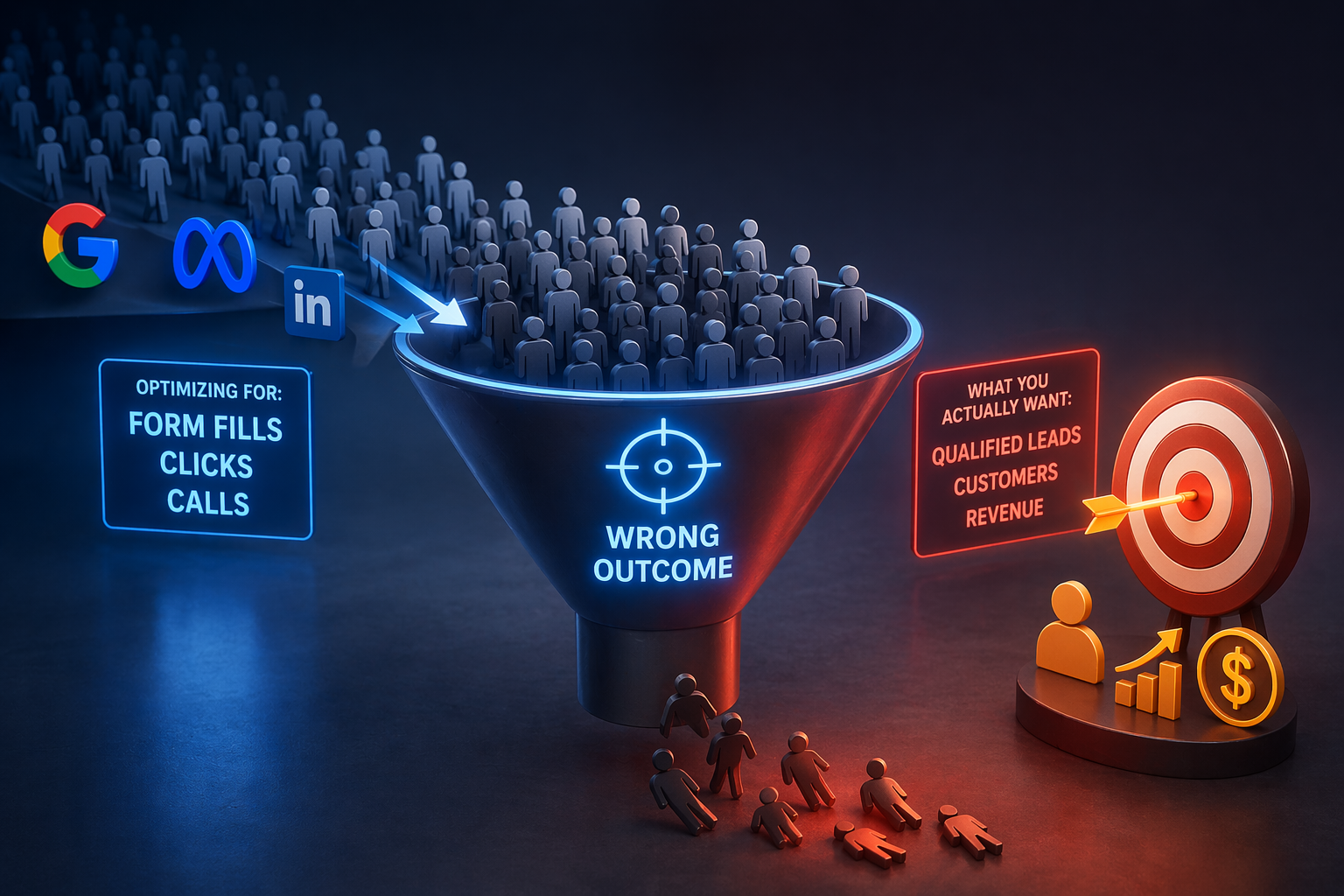
Most businesses unintentionally train platforms like Google and Meta to prioritize the wrong behavior.
If your definition of a “conversion” is a form fill or a phone call, the algorithm will find people most likely to complete those actions. The issue is that those actions don’t necessarily indicate buying intent.
This is why campaigns often generate:
People looking for quick quotes with no intent to move forward
Users outside your actual target market
Leads that never progress past the first interaction
The platform isn’t underperforming—it’s simply optimizing based on incomplete information.
If you’ve ever looked deeper into how traffic turns into actual customers, especially through a conversion-focused lens, you’ll recognize this gap immediately. (This article on conversion rate optimization explains how this disconnect plays out across the funnel.)
What a High-Quality Lead Actually Looks Like
A high-quality lead is defined by its ability to become revenue—not just by its ability to convert.
It’s someone who aligns with your ideal customer profile, has a real need for your service, and moves forward in your sales process.
More importantly, high-quality leads tend to share a few consistent traits:
They understand what they need
They are actively evaluating solutions
They are capable of making a purchase decision
When you begin measuring leads this way, it becomes obvious why many campaigns fall short. They’re designed to capture activity, not identify opportunity.
Why Lead Quality Breaks Down in Most Campaigns
Lead quality issues rarely come from a single mistake. They’re usually the result of multiple small inefficiencies stacking together.
In many cases, there’s no connection between the CRM and the ad platforms. That means your campaigns never learn which leads actually turned into customers.
At the same time, targeting is often too broad, forms are too easy to complete, and messaging is designed to attract rather than filter. Add in slow follow-up, and even strong leads can fall apart.
Individually, each of these issues seems manageable. Combined, they create a system that prioritizes volume over value.
The Shift That Changes Everything: Optimize for Revenue, Not Leads
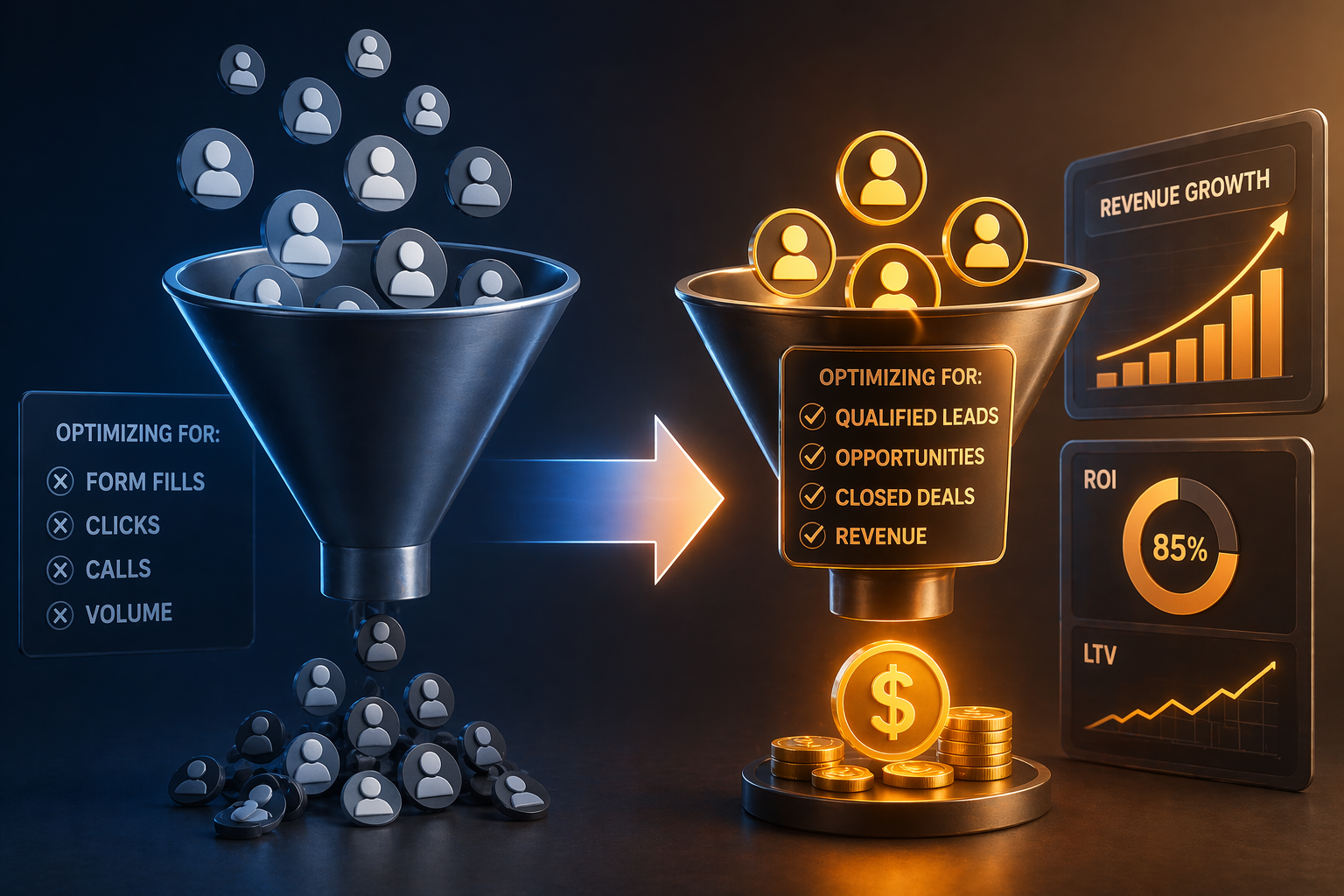
The turning point for most businesses comes when they stop focusing on lead volume and start focusing on outcomes.
Instead of optimizing campaigns around form submissions, the goal becomes optimizing around what actually drives revenue. That includes qualified leads, booked calls, and closed deals.
Once those signals are fed back into platforms, performance starts to shift. Targeting becomes more refined, and the algorithm begins prioritizing users who resemble your best customers—not just your easiest conversions.
This shift also aligns with how modern AI systems interpret intent and data. Platforms are becoming more intelligent, but they rely heavily on the quality of the signals you provide. (This is explored further in this article on why search data still powers AI systems.)
Better Targeting Isn’t About More Reach—It’s About Precision
There’s a tendency to believe that expanding reach will improve performance by giving platforms more data to work with.
In reality, broader targeting often introduces more irrelevant traffic than valuable opportunities.
Improving lead quality means tightening your targeting and focusing on intent. This might reduce total lead volume, but it increases the likelihood that each lead is worth pursuing.
The difference is simple: instead of attracting everyone, you’re attracting the right people.
Why Adding Friction Improves Results
It may feel counterintuitive, but making it slightly harder to become a lead often improves overall performance.
When forms are too simple, they attract anyone willing to submit basic information. When forms include thoughtful qualification, they naturally filter out low-intent users.
That might include asking about budget, timeline, or specific service needs. The goal isn’t to reduce conversions—it’s to ensure that the conversions you do get are meaningful.
Over time, this leads to fewer leads but significantly higher quality outcomes.
Your Messaging Should Filter, Not Just Attract
Your ads and landing pages play a critical role in shaping lead quality.
When messaging is too broad or overly focused on price, it tends to attract the wrong audience. On the other hand, clear and specific messaging helps set expectations before someone even clicks.
Strong positioning can:
Eliminate mismatched prospects early
Align expectations between marketing and sales
Improve close rates without increasing spend
The clearer you are about who your service is for, the easier it becomes to attract qualified leads.
Lead Quality Doesn’t End at the Click
Even with strong targeting and messaging, lead quality can break down after the conversion.
Speed of response plays a major role. The moment a lead comes in is when intent is at its highest. Delays in follow-up can quickly turn a strong opportunity into a lost one.
High-performing teams typically:
Respond within minutes
Use multiple contact methods
Follow a structured qualification process
Lead quality isn’t just about who you attract—it’s about how effectively you handle them once they engage.
The Role of First-Party Data in Modern Lead Quality
As privacy regulations evolve and third-party tracking becomes less reliable, first-party data has become one of the most valuable assets in paid advertising.
Your ad platforms are only as effective as the data you provide. If you’re optimizing based on surface-level signals like clicks or basic form fills, you’re limiting how well those platforms can perform.
First-party data changes that.
It allows you to define success based on real outcomes—what actually turns into revenue—rather than what simply looks like engagement.
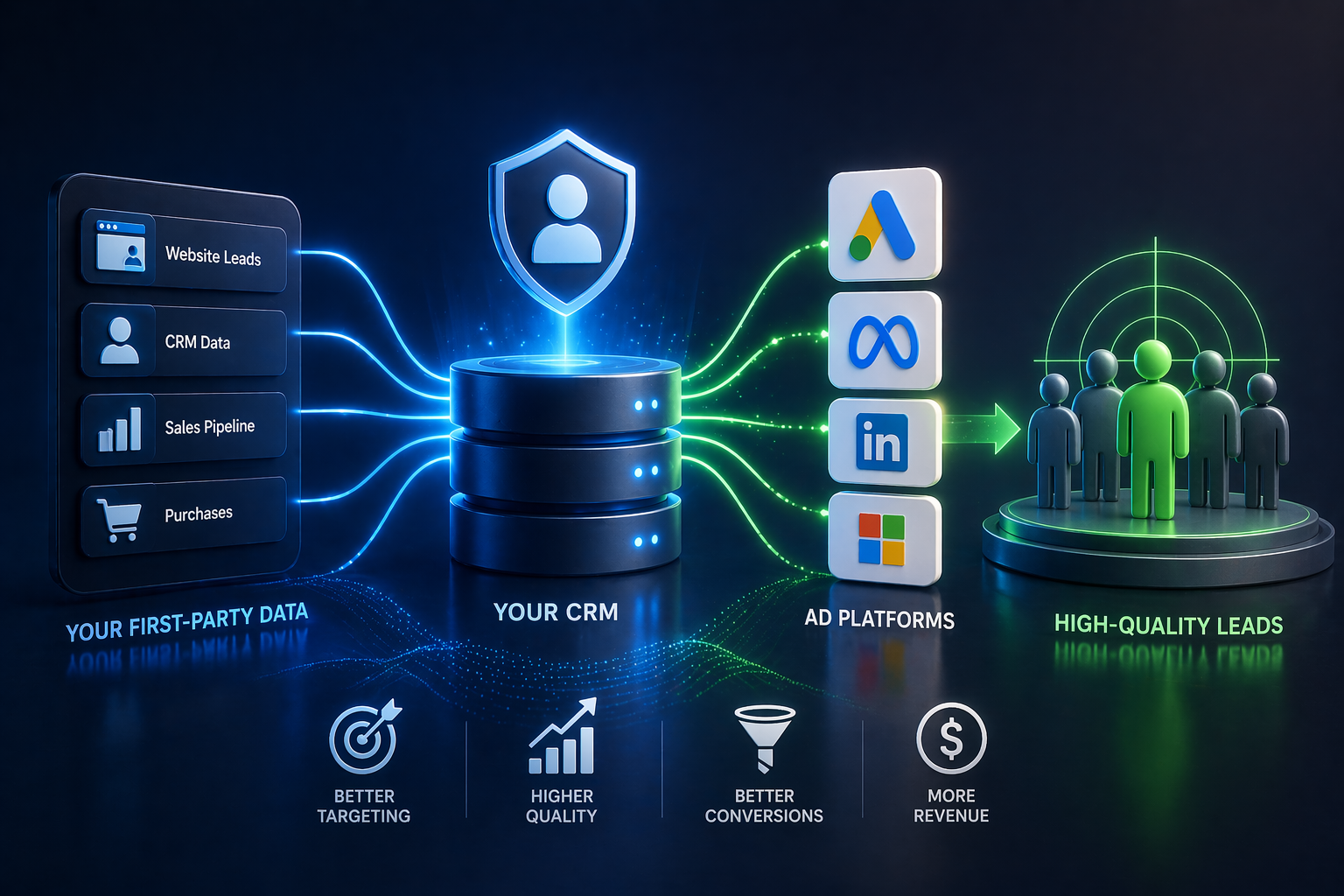
This data typically comes from your own systems, including leads, customers, and pipeline activity. When used correctly, it gives platforms a much clearer understanding of who your ideal customer really is.
Why First-Party Data Is So Powerful
When you feed real business outcomes back into your campaigns, you fundamentally change how the algorithm learns.
Instead of optimizing for users who convert easily, it begins optimizing for users who convert meaningfully.
That shift improves:
Audience targeting accuracy
Match rates between your data and platform users
Overall efficiency in converting leads into revenue
Over time, platforms begin identifying patterns in your best customers and using those patterns to find similar users.
CRM Platforms You Can Integrate with Paid Ads
Most businesses already have the data they need—they just aren’t using it effectively. Modern CRM platforms can connect directly to ad platforms or through middleware, allowing you to push real performance data back into your campaigns.
Common CRM platforms that integrate with paid ads include:
HubSpot — Strong native integrations with ad platforms and user-friendly for marketing teams
Salesforce — Highly customizable and ideal for larger organizations with complex sales pipelines
Zoho CRM — Cost-effective solution with solid integration capabilities
Pipedrive — Simple, sales-focused CRM with easy automation options
GoHighLevel — Popular in agency and lead-gen environments with built-in marketing tools
Microsoft Dynamics 365 — Enterprise-level CRM with deep integration into Microsoft’s ecosystem
These platforms can integrate with major advertising systems such as:
Google Ads
Meta Ads
LinkedIn Ads
If a native integration isn’t available, tools like Zapier can be used to connect your CRM and ad platforms, ensuring your data still flows correctly between systems.
How CRM Integration Works
At a high level, the process is straightforward.
A lead enters your CRM. As that lead progresses—becoming qualified, booking a call, or closing as a customer—those milestones are sent back to your ad platforms.
That feedback loop allows the algorithm to learn which leads actually matter.
There are a few ways to set this up depending on your resources:
Native integrations, which offer the most accurate and scalable solution
Middleware connections through tools like Zapier for flexibility
Manual uploads for businesses just getting started
Each method achieves the same goal: connecting marketing performance to real business outcomes.
Why This Is Critical for Reaching the Right Audience
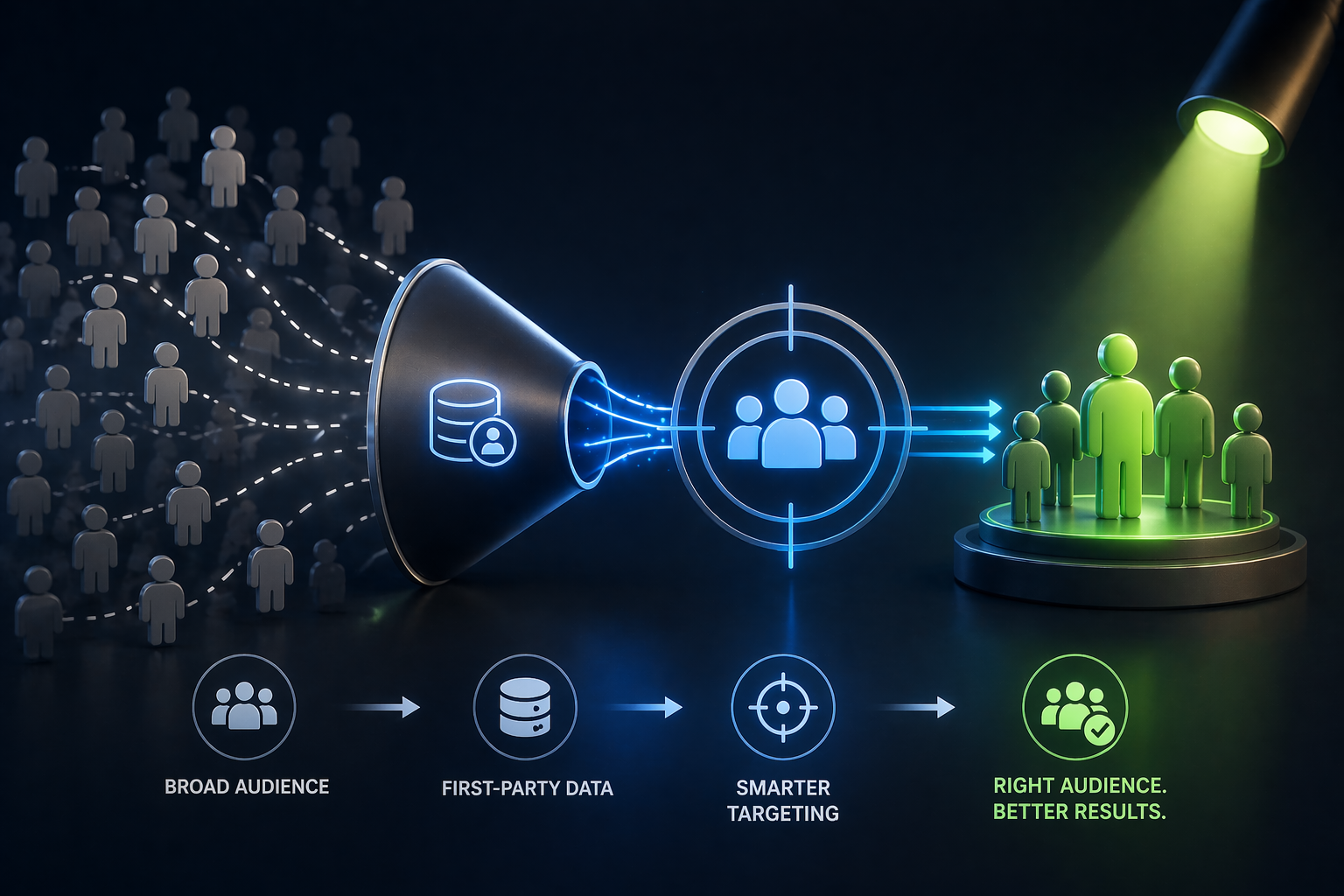
Without CRM integration, your campaigns are essentially guessing who your ideal customer is.
With it, they’re learning from real data.
This allows platforms to:
Prioritize users who resemble your best customers
Avoid users who match low-quality leads
Improve audience modeling and targeting over time
Instead of chasing volume, your campaigns begin to focus on precision.
The Competitive Advantage Most Businesses Miss
Most advertisers stop at basic conversion tracking because it’s easier to implement.
But that creates a gap.
Businesses that invest in first-party data integration are feeding platforms better signals, which leads to better results. Over time, that advantage compounds.
You end up with:
Higher-quality leads
Less wasted ad spend
Stronger alignment between marketing and sales
More predictable growth
What Happens When You Get This Right
When you start prioritizing lead quality, the results can feel counterintuitive at first.
You may see fewer leads. Your cost per lead might increase.
But the metrics that actually matter begin to improve—close rates, revenue efficiency, and overall return on investment.
That’s when your marketing transitions from generating activity to driving real business growth.
Final Thoughts
Most businesses don’t need more leads. They need better ones.
By improving your data signals, tightening your targeting, refining your qualification process, and integrating your CRM with your ad platforms, you can dramatically increase the value of every lead you generate.
When that happens, your campaigns stop being about volume—and start becoming a true revenue engine.
Your Ads Aren’t Broken—Your Signals Are Video:
FAQ: Improving Lead Quality from Paid Ads
What is lead quality in paid advertising?
Lead quality in paid advertising refers to how likely a lead is to become a paying customer. A high-quality lead fits your ideal customer profile, has real intent, and progresses through your sales pipeline toward a closed deal.
How do you improve lead quality from Google Ads?
To improve lead quality from Google Ads, you need to optimize for outcomes beyond form submissions. This includes:
Using offline conversion tracking tied to qualified leads or revenue
Focusing on high-intent keywords instead of broad traffic
Adding negative keywords to filter out irrelevant searches
Feeding CRM data back into Google Ads to improve targeting
How do you improve lead quality from Meta (Facebook and Instagram) ads?
Improving lead quality from Meta ads requires stronger data signals and better audience targeting. Key strategies include:
Using the Conversions API to send back qualified lead data
Building audiences from actual customers, not just leads
Adding more qualification fields to instant forms
Excluding low-quality or irrelevant audiences
How do you improve lead quality from LinkedIn Ads?
Lead quality on LinkedIn Ads improves when targeting is tightly aligned with your ideal customer. Best practices include:
Targeting by job title, company size, and industry
Using CRM data to create matched audiences
Optimizing for qualified leads instead of total leads
Sending conversion data back through LinkedIn’s Conversions API
What is first-party data in advertising?
First-party data is information collected directly from your business, such as customer lists, leads, and CRM data. This data is highly valuable because it allows ad platforms to optimize targeting based on real customer behavior rather than assumptions.
How does CRM integration improve lead quality?
CRM integration improves lead quality by sending real business outcomes—such as qualified leads or closed deals—back to ad platforms. This helps algorithms learn which users are most likely to convert into revenue, leading to better targeting and higher-quality leads over time.
What is offline conversion tracking and why is it important?
Offline conversion tracking connects your ad campaigns to real-world outcomes like sales, booked appointments, or qualified leads. It is important because it allows platforms to optimize for actual revenue instead of surface-level actions like clicks or form fills.
Why are my ads generating leads but no sales?
If your ads are generating leads but not sales, it usually means you are optimizing for the wrong conversion signals. Common causes include:
Tracking form submissions instead of qualified leads
Poor targeting that brings in low-intent users
Lack of CRM feedback to ad platforms
Weak follow-up or sales processes
Does increasing form friction improve lead quality?
Yes, increasing form friction can improve lead quality. Adding qualifying questions—such as budget, timeline, or service needs—filters out low-intent users and allows higher-quality prospects to move forward.
Is a higher cost per lead (CPL) bad?
A higher cost per lead is not necessarily bad if lead quality improves. In many cases, paying more for fewer, higher-quality leads results in a lower overall cost per acquisition and better return on investment.
How long does it take to improve lead quality in paid ads?
Improving lead quality typically takes 30 to 60 days after implementing better tracking and data signals. This allows ad platforms enough time to learn from new inputs and adjust targeting accordingly.
What is the most important factor in improving lead quality?
The most important factor is optimizing for real business outcomes, such as qualified leads or revenue, instead of basic conversions. Without this shift, ad platforms will continue to prioritize volume over quality.