
How Service-Area Businesses Can Rank on Google Without a Physical Location
Service-area businesses face a unique challenge in search. Unlike retail stores or offices with a public address, many businesses—such as HVAC companies, roofers, plumbers, electricians, cleaners, landscapers, mobile medical services, and contractors—operate entirely in the field. They serve customers at their locations, not from a storefront.
Yet these businesses still need to appear prominently in Google Search and Maps to compete.
The good news is that not having a physical storefront does not prevent you from ranking well. The bad news is that many service-area businesses unknowingly sabotage their visibility by following outdated or incorrect SEO advice.
This guide breaks down exactly how service-area businesses can rank on Google without a physical location, what actually matters today, and how to build sustainable visibility in local and AI-driven search results.
What Is a Service-Area Business?
A service-area business (often abbreviated as SAB) is a company that travels to customers rather than serving them at a public location. Examples include:
HVAC and air conditioning companies
Roofing and siding contractors
Plumbers and electricians
Pest control services
Cleaning and janitorial companies
Landscaping and lawn care providers
Mobile medical, dental, or wellness services
Restoration and emergency services
These businesses typically do not want their home address shown publicly, or they operate without a customer-facing office entirely.
Google explicitly allows this model—but ranking requires the right setup.
The Biggest Myth: “You Need a Physical Office to Rank”
One of the most damaging myths in local SEO is that you must have a physical storefront to rank in Google Maps or local results.
This is not true.
What is true is that Google prioritizes:
Relevance
Proximity
A service-area business can satisfy all three without a storefront—if the business is structured correctly.
The problem is not the lack of an address.
The problem is weak signals, poor configuration, and generic content.
Step 1: Properly Configure Your Google Business Profile (Without an Address)
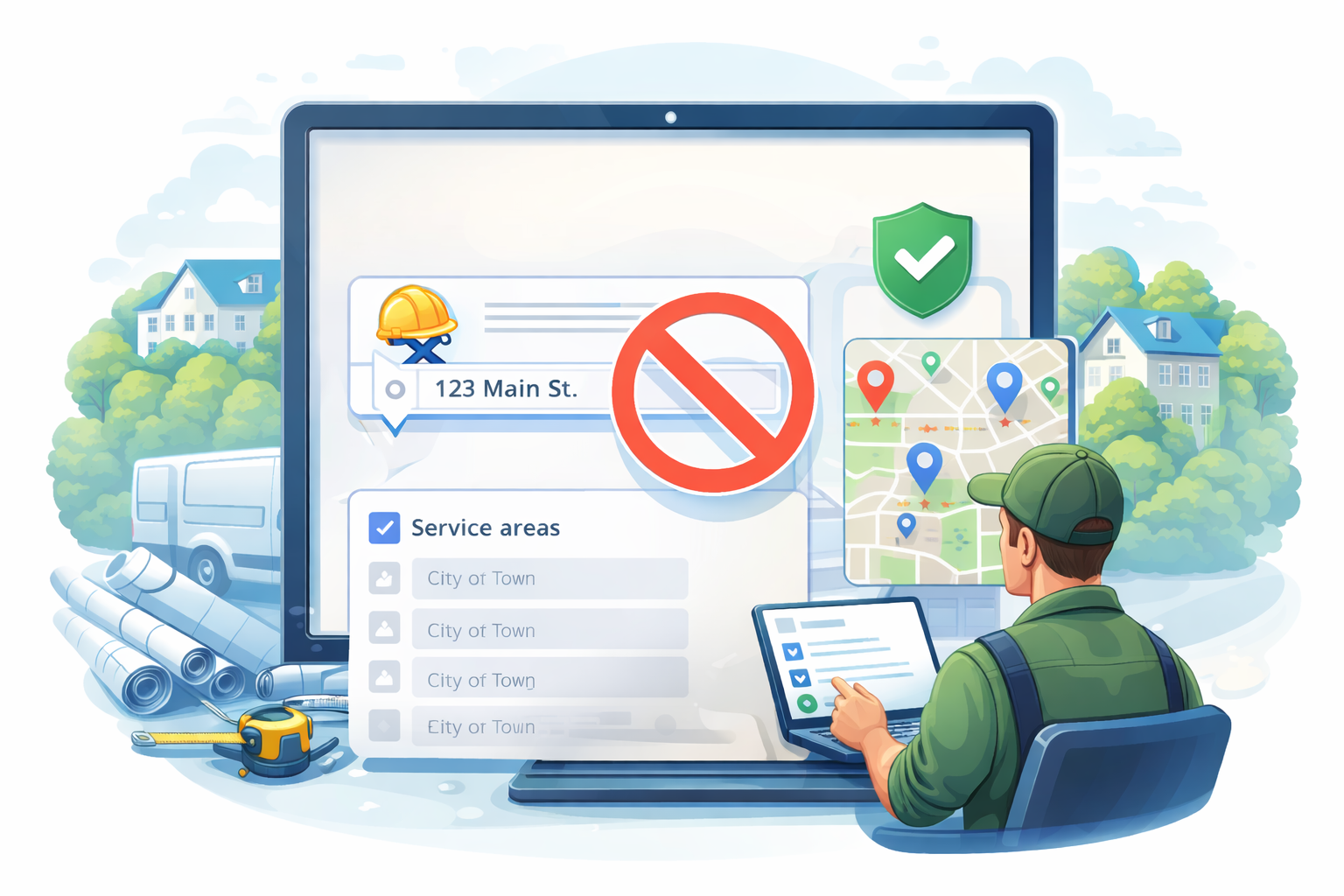
Your Google Business Profile is still the foundation of visibility for service-area businesses.
Hide Your Physical Address (Correctly)
If customers do not visit your location:
Hide the street address
Set your service areas instead
Do not attempt to use virtual offices, co-working spaces, or fake addresses. These tactics often result in suspensions or long-term trust issues.
Define Service Areas Strategically
Avoid listing dozens of cities randomly.
Instead:
Focus on primary service zones you can realistically serve
Align service areas with actual landing pages on your website
Prioritize high-intent cities or regions, not broad states
Google cross-checks your service areas against your website content and real-world signals.
Step 2: Build Location Authority Without Location Spam

Many service-area businesses make the mistake of creating thin, repetitive “city pages” with swapped-out names. This approach is increasingly ineffective.
Instead, location authority should be built through depth, relevance, and clarity.
Create High-Quality Service Area Pages
Each core service area should have a page that:
Clearly explains services offered in that location
Addresses local pain points, climate, regulations, or property types
Includes real examples of work or scenarios
Uses natural language—not keyword stuffing
Think of these pages as local trust pages, not SEO placeholders.
Step 3: Optimize for “Near Me” and Implicit Local Searches
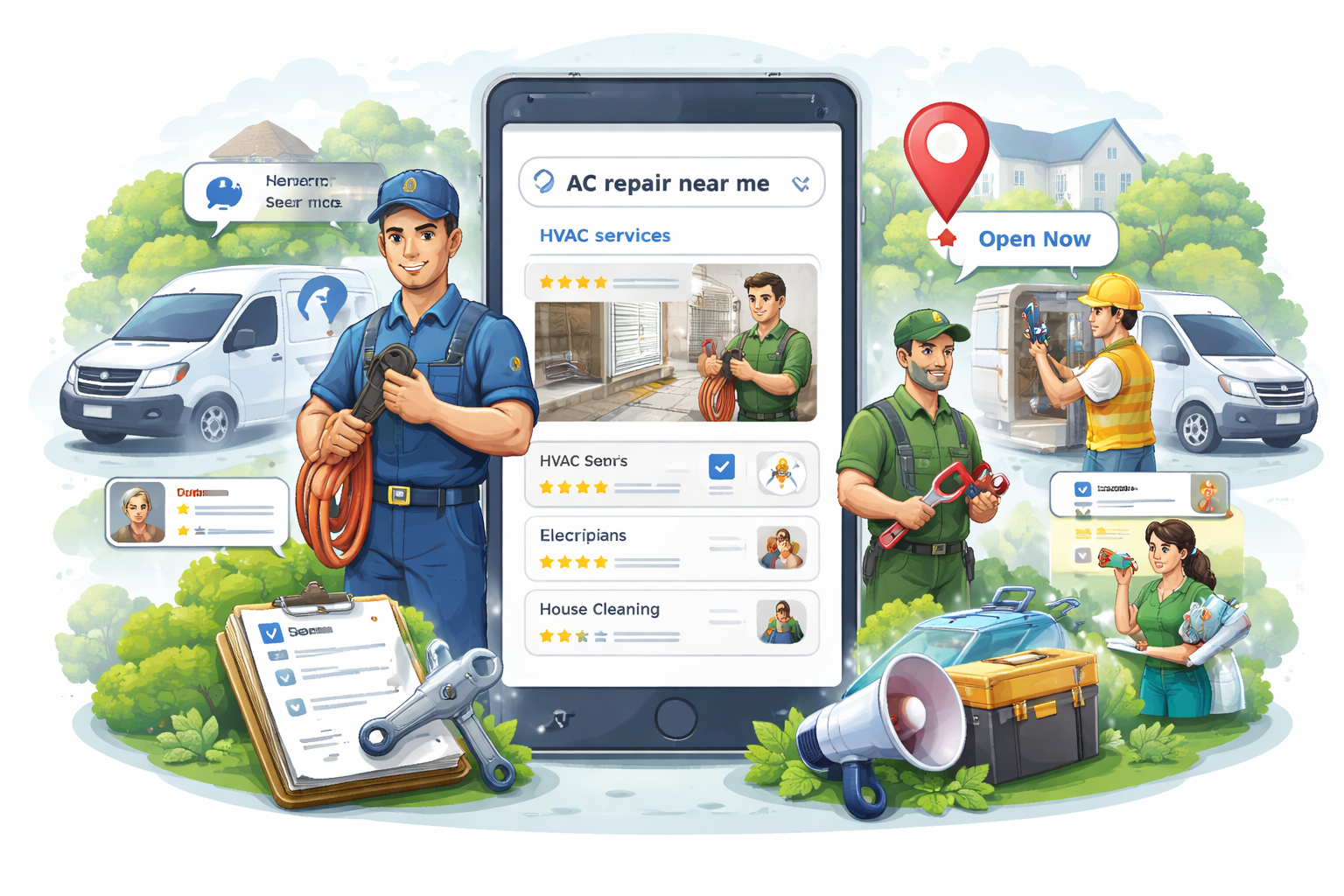
Most service-area customers do not search by city name. They search by intent.
Examples:
“AC repair near me”
“emergency plumber”
“roofing company open now”
“house cleaning service”
To rank for these queries, your website must clearly communicate:
What you do
Where you do it
Who you serve
Why you are trusted
This information should be present in:
Page headings
Service descriptions
Internal linking
FAQs
Structured content sections
Google infers proximity from content + profile + engagement, not just an address pin.
Step 4: Reviews Matter More for Service-Area Businesses
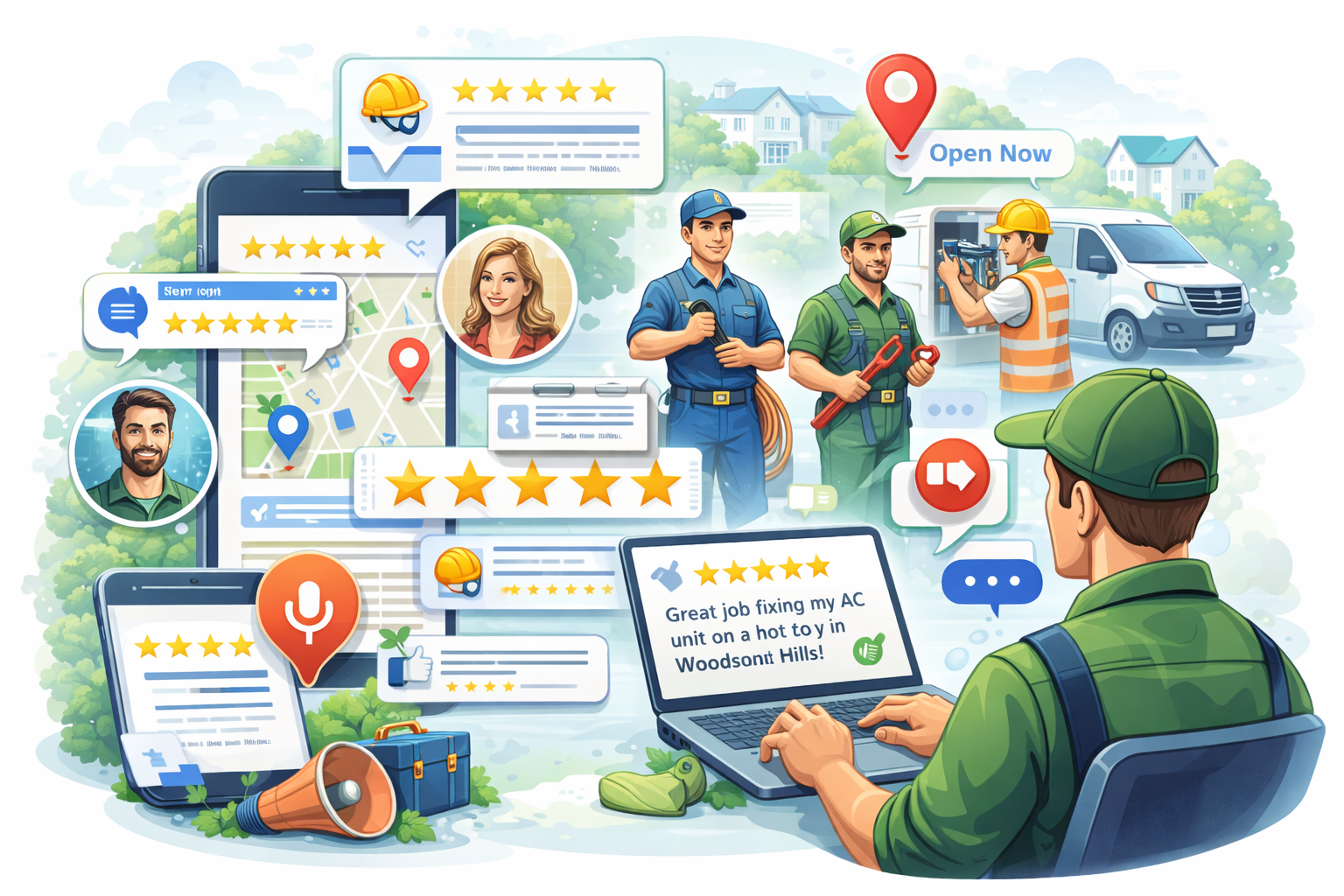
Reviews are one of the strongest ranking and conversion factors for businesses without storefronts.
What Google Looks for in Reviews
Frequency (steady flow, not bursts)
Recency
Service-specific language
Location mentions (natural, not forced)
Response rate from the business
Encourage customers to mention:
The service performed
The general area (city or neighborhood)
The problem solved
You do not need scripts—just gentle guidance.
Step 5: Build Strong On-Site Trust Signals

Without a physical location, your website must do more credibility work.
High-performing service-area websites include:
Clear service descriptions
Before-and-after examples
Certifications and licenses
Real photos (not stock-only)
Team or technician highlights
Transparent contact information
Google and users both need to feel confident that your business is legitimate, experienced, and active.
Step 6: Create Content That Matches Service-Area Intent
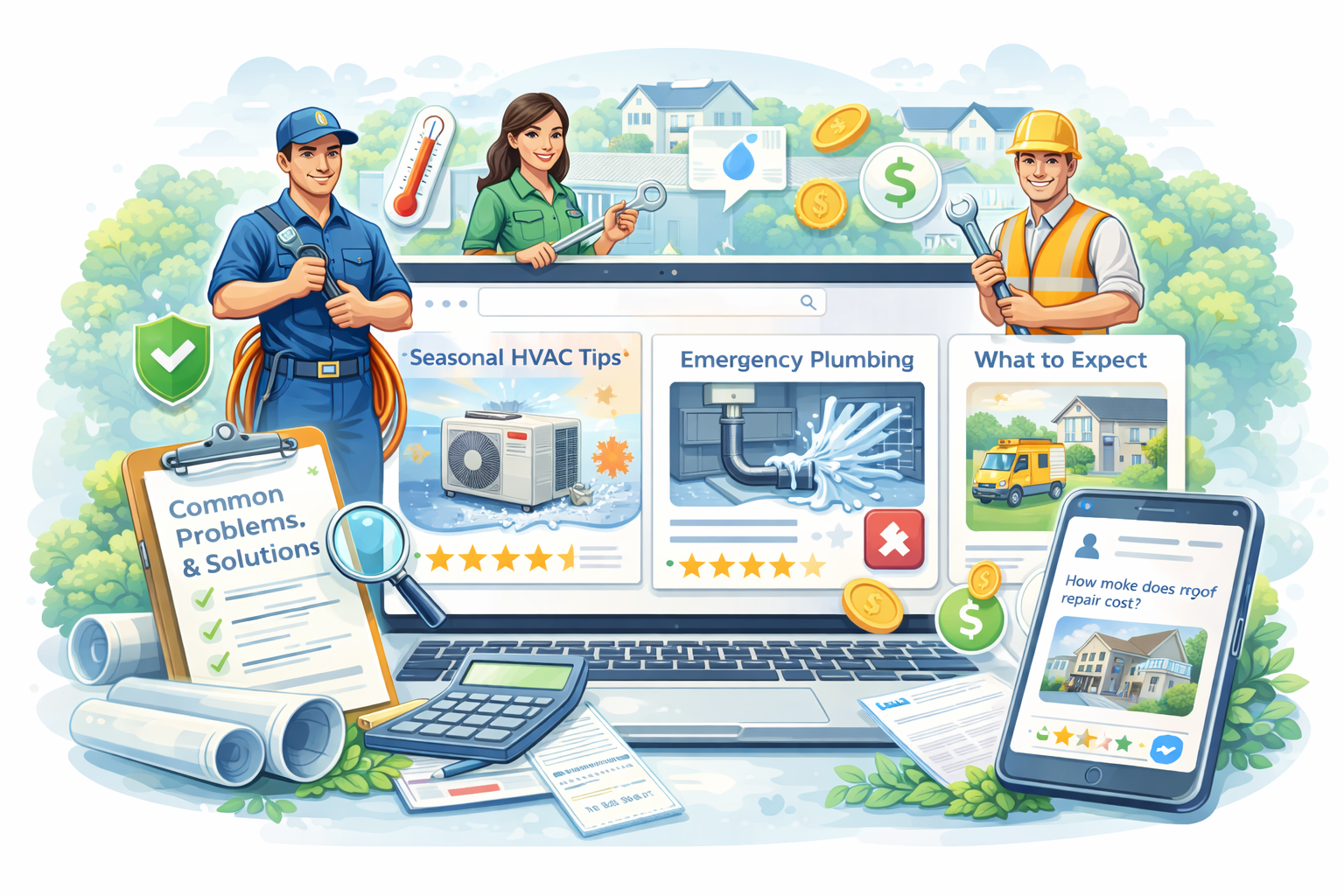
Many service-area businesses rely only on service pages. This is a missed opportunity.
Supporting content builds authority and expands visibility.
Effective content topics include:
Common service problems and solutions
Seasonal maintenance guides
Emergency scenarios
Cost explanations
“What to expect” service walkthroughs
Local considerations and best practices
This content:
Attracts early-stage searches
Supports AI-generated results
Builds topical authority
Improves conversion trust
Step 7: Optimize for AI Search and Google AI Overviews
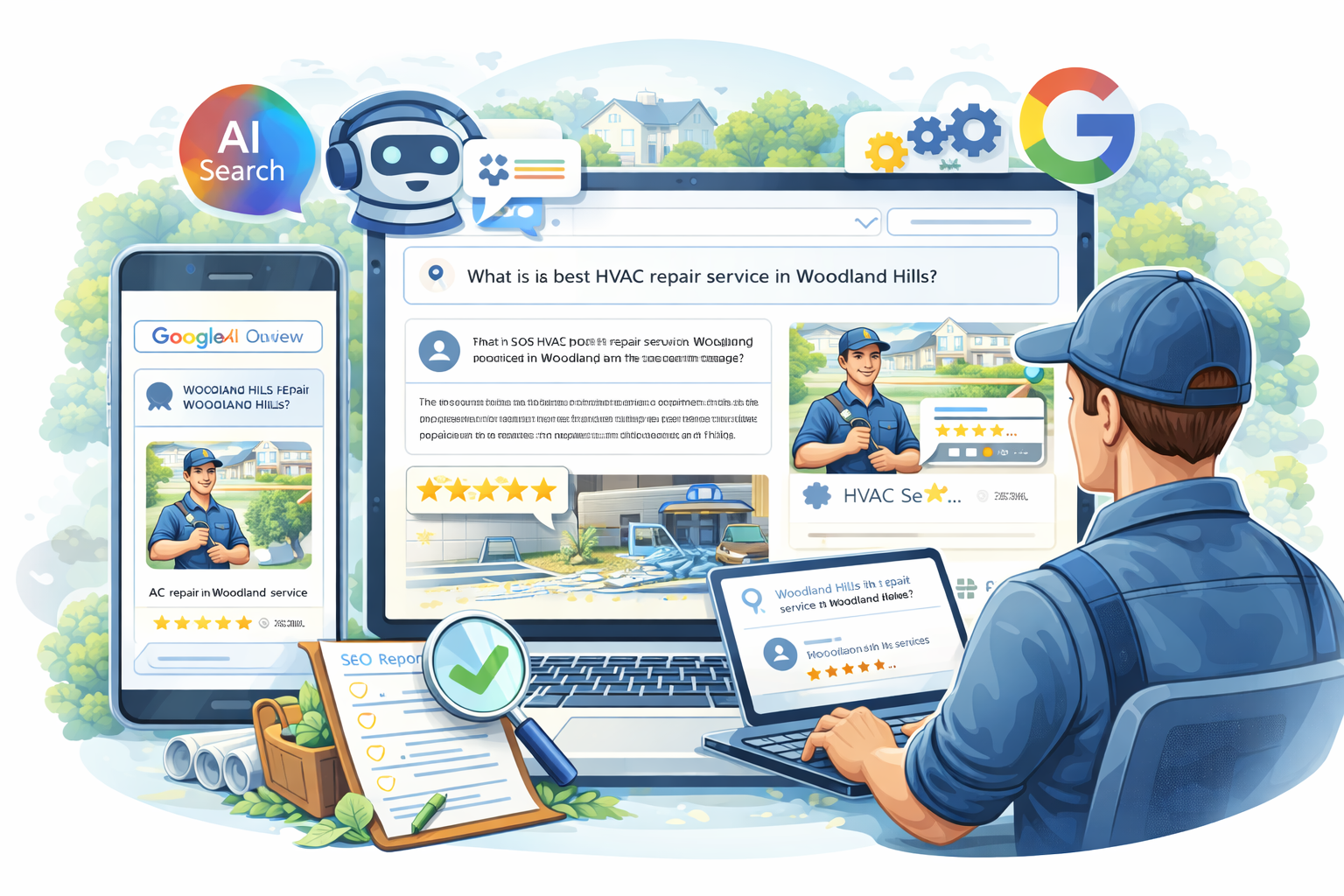
AI-driven search is changing how visibility works—especially for service businesses.
AI results favor:
Clear service explanations
Structured content
FAQ-style answers
Consistent branding across platforms
Strong reputation signals
Service-area businesses that explain how they help, who they help, and where they help clearly are more likely to be surfaced—even when users never click a traditional result.
Visibility now matters as much as rankings.
Step 8: Avoid the Most Common Service-Area SEO Mistakes
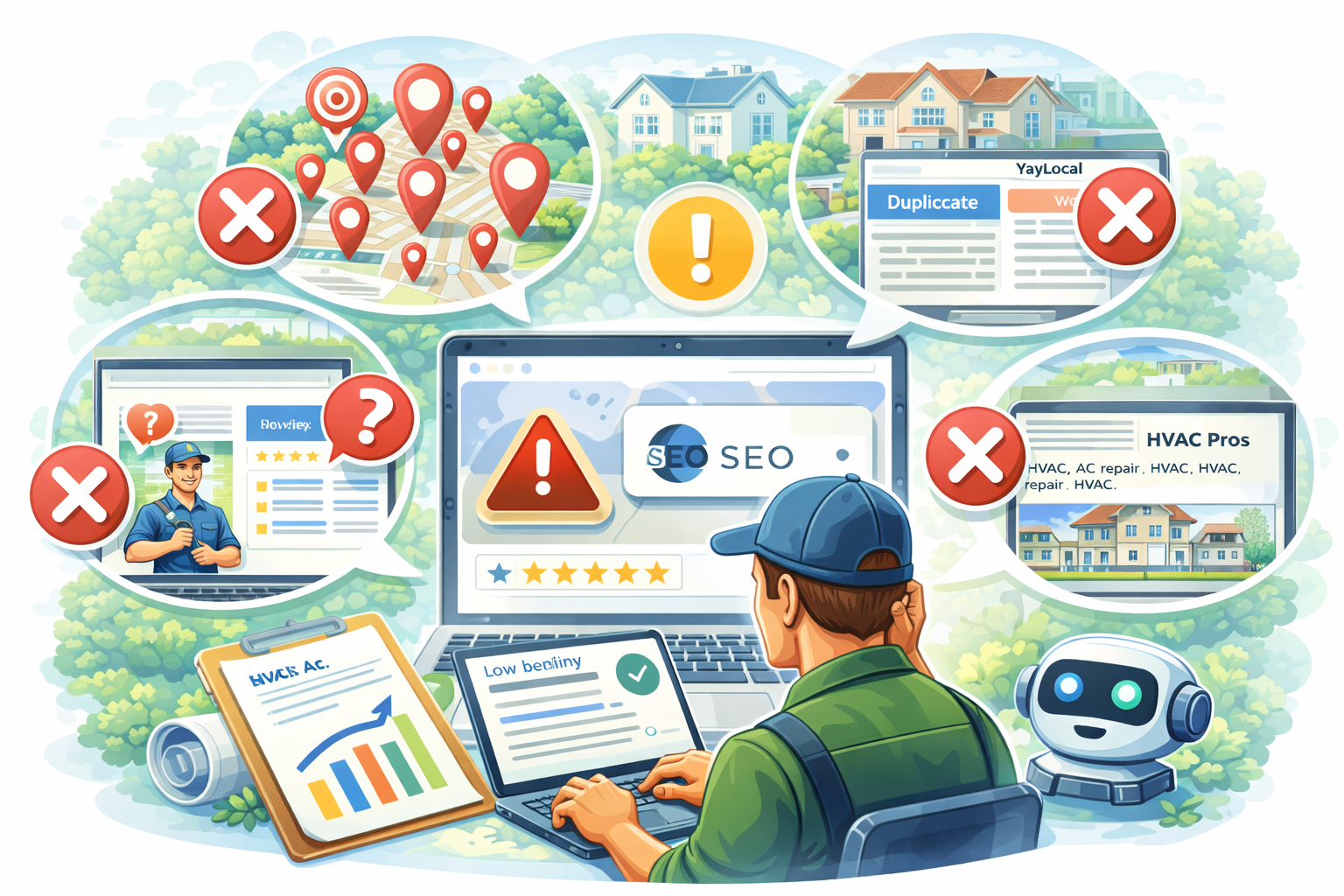
Here are mistakes that consistently hold service-area businesses back:
Using fake addresses or virtual offices
Creating dozens of low-quality city pages
Ignoring reviews or not responding to them
Having inconsistent business information online
Thin service descriptions
No supporting content
Relying solely on Google Business Profile without a strong website
Fixing these issues often leads to noticeable improvements without aggressive tactics.
Why Service-Area SEO Is Different (And Often Harder)
Ranking without a physical location requires:
Better content
Stronger trust signals
Smarter local targeting
Long-term consistency
But it also creates an advantage.
Many competitors rely on shortcuts. Businesses that invest in real authority and clarity often dominate their service areas—even against larger brands.
Final Thoughts
Service-area businesses absolutely can rank on Google without a physical location—but not by accident.
Success comes from:
Strategic service-area targeting
High-quality, location-relevant content
Strong reviews and engagement
Clear trust signals
If your business depends on local visibility to generate leads, this is no longer optional—it is foundational.
Rank Locally Without a Storefront: 5 Quick Wins Video:
Frequently Asked Questions (FAQ)
Can a service-area business rank on Google without showing an address?
Yes. Google allows service-area businesses to hide their address and still rank, as long as the profile and website are configured correctly.
How many service areas should I list?
Focus on realistic, core service areas you actively serve. Quality and relevance matter more than quantity.
Do I need location pages for every city?
No. You should only create location pages where you can provide meaningful, unique content and real service value.
Are virtual offices safe to use for SEO?
No. Virtual offices and fake addresses often lead to suspensions or long-term trust issues.
Do reviews matter more for service-area businesses?
Yes. Reviews are a critical trust and ranking signal, especially when there is no storefront.
Can service-area businesses show up in Google Maps?
Yes. Service-area businesses can appear in Maps results even without a visible address.
Does content help local rankings for service-area businesses?
Absolutely. Informational and service-focused content strengthens authority, relevance, and AI visibility.
Is SEO enough, or do service-area businesses need AI optimization too?
Modern visibility requires both. Traditional SEO builds the foundation, while AI optimization improves reach in AI-driven search results.