Leveraging AI for Small Business Marketing Automation: Beyond the Chatbot Hype
In the bustling world of small business, every minute and every dollar counts. The pursuit of growth often collides with the reality of limited resources, forcing entrepreneurs to wear many hats and stretch themselves thin. For years, "marketing automation" conjured images of complex, expensive software suites accessible only to large enterprises. Then came the AI revolution, and suddenly, the landscape changed.
While chatbots often steal the spotlight when discussing AI in marketing, they represent just a fraction of the transformative power artificial intelligence offers small businesses. The true magic of AI lies in its ability to take over mundane, repetitive, and time-consuming tasks across your marketing spectrum, freeing you to focus on strategy, creativity, and direct customer engagement. This isn't just about efficiency; it's about leveling the playing field, allowing even the smallest operations to punch above their weight and achieve sophisticated marketing outcomes without ballooning overheads.
Let’s dive into how small business owners can harness AI for genuine marketing automation, moving far beyond basic chatbots to revolutionize their video creation, social media presence, and SEO efforts.
The AI-Powered Marketing Revolution: A Game Changer for Small Business
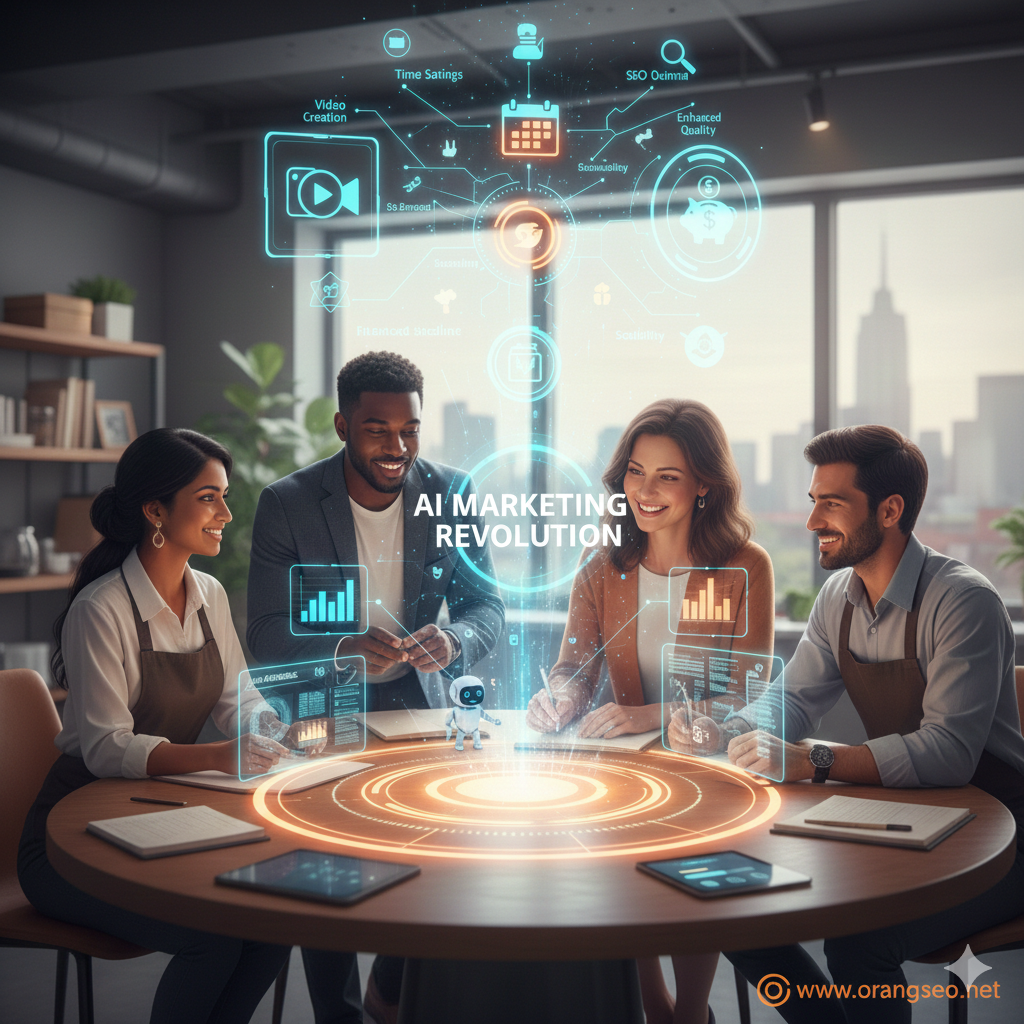
At its core, AI excels at pattern recognition, data processing, and content generation at a scale and speed impossible for humans. For a small business, this translates into several critical advantages:
Time Savings: Automating repetitive tasks gives you back hours in your day.
Cost Reduction: AI tools can replace the need for expensive freelancers or in-house specialists for certain tasks.
Enhanced Output Quality: AI can help generate high-quality content, analyze performance, and optimize strategies with data-driven precision.
Scalability: As your business grows, AI tools can scale with you, handling increased volumes of content and tasks without proportional increases in manual effort.
Beyond Text: AI for Video Creation
Video is no longer a luxury in marketing; it's a necessity. From short-form social media clips to explainer videos and customer testimonials, video content captivates audiences and drives engagement like no other medium. Historically, video production has been a significant barrier for small businesses due to the costs associated with equipment, editing software, and professional videographers. AI is dismantling that barrier.
How AI Transforms Video Production:
Script Generation: AI tools can help you brainstorm video ideas, outline content, and even write full scripts based on a few prompts. Need a script for a product demo? AI can craft compelling dialogue and descriptions in minutes.
Text-to-Video Conversion: This is where the magic truly happens. Platforms powered by AI can take your text script and transform it into a complete video. They can select relevant stock footage, generate realistic voiceovers (in multiple languages, no less!), add background music, and even animate text and graphics. Imagine turning a blog post into an engaging video without ever touching a camera.
Avatar-Based Videos: For businesses that want a consistent on-screen presence without the need for a human presenter, AI can create lifelike digital avatars. You simply provide the script, and the avatar delivers it convincingly, complete with facial expressions and gestures. This is ideal for explainer videos, FAQs, or regular news updates.
Automated Editing and Enhancement: AI can assist with basic video editing tasks, such as cutting silent sections, adding captions (crucial for accessibility and social media viewing), and enhancing video quality. Some tools can even identify key moments in longer videos and suggest shorter clips for social media promotion.
Impact on Small Businesses:
Professional-Grade Content: Produce polished videos that rival those from larger competitors.
Rapid Production: Go from idea to finished video in a fraction of the time.
Cost-Effective: Drastically reduce or eliminate the need for expensive video equipment and specialists.
Increased Engagement: Leverage the power of video across all your marketing channels.
Supercharging Your Social Media Scheduling and Content
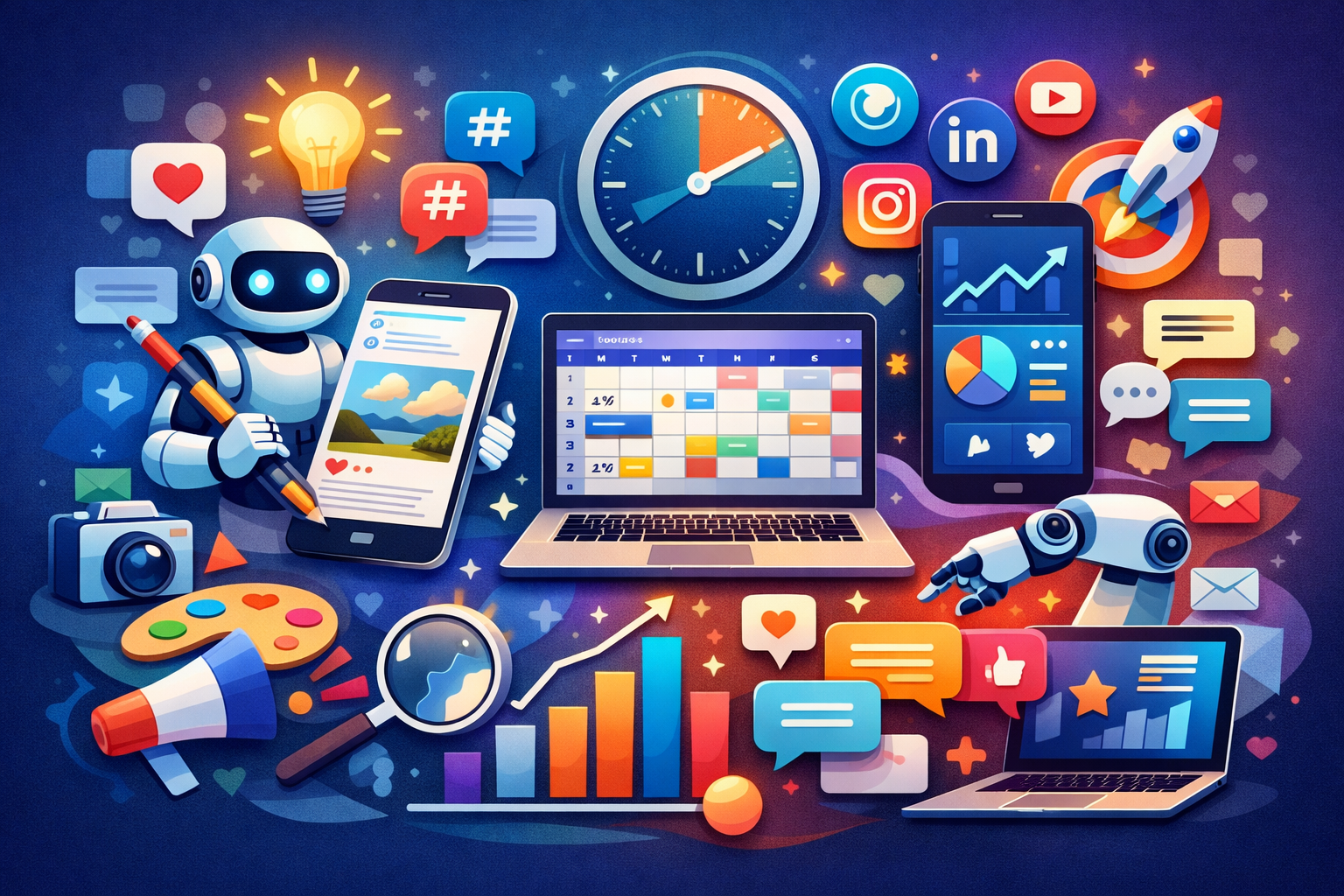
Social media is a non-negotiable marketing channel, but managing multiple platforms, crafting engaging posts, and maintaining a consistent schedule can feel like a full-time job. AI offers a powerful solution, automating much of the heavy lifting while enhancing the quality and relevance of your social presence.
How AI Elevates Social Media Marketing:
Content Generation and Curation: Beyond just writing captions, AI can generate entire social media posts, including suggested hashtags and calls to action, tailored to specific platforms (e.g., a concise tweet vs. a detailed LinkedIn post). It can also scour the internet for trending topics and relevant articles in your niche, suggesting content to share with your audience.
Optimal Posting Times: AI-powered scheduling tools analyze your audience's activity patterns and recommend the best times to post for maximum reach and engagement, taking the guesswork out of your publishing calendar.
Image and Graphic Creation: Struggling to create eye-catching visuals? AI image generators can produce unique graphics, adapt existing brand assets, or even suggest image styles based on your text content. You can generate a series of images for an Instagram carousel or a compelling visual for a Facebook ad with simple text prompts.
Performance Analysis and Optimization: AI tools can monitor your social media performance, identifying which types of posts resonate most with your audience, which hashtags drive engagement, and what content performs best on each platform. This data-driven insight allows you to continually refine your strategy without manual data crunching.
Audience Engagement and Response Automation (Beyond Chatbots): While chatbots handle direct customer service, AI can also assist in crafting responses to common comments, identifying sentiment in discussions, and even suggesting personalized engagement opportunities.
Impact on Small Businesses:
Consistent Brand Presence: Maintain an active and engaging presence across all relevant social channels.
Time Efficiency: Automate content creation, scheduling, and analysis, freeing up hours each week.
Data-Driven Strategy: Make informed decisions about your social media efforts, leading to better ROI.
Enhanced Creativity: Use AI as a brainstorming partner to overcome creative blocks and generate fresh ideas.
Streamlining Repetitive SEO Tasks to Save Overhead

Search Engine Optimization (SEO) is the backbone of organic online visibility. For small businesses, effective SEO can mean the difference between being found by potential customers and getting lost in the digital noise. However, SEO is often perceived as complex, technical, and incredibly time-consuming. AI is here to demystify and automate many of the repetitive, yet crucial, aspects of SEO.
How AI Simplifies and Automates SEO:
Keyword Research and Analysis: AI tools can identify high-volume, low-competition keywords relevant to your business, analyze competitor keyword strategies, and even uncover semantic keywords that humans might miss. This goes beyond basic keyword suggestions, offering deep insights into search intent.
Content Optimization: AI can analyze your existing content and suggest improvements for on-page SEO. This includes recommending optimal keyword density, suggesting internal linking opportunities, improving readability, and even rewriting meta descriptions and title tags for better click-through rates.
Blog Post and Article Generation (Drafting): While not a replacement for human expertise, AI can generate initial drafts of blog posts, product descriptions, or FAQ sections based on target keywords and topics. This drastically reduces the time spent on content creation, allowing you to focus on refining and adding your unique voice.
Technical SEO Audits: AI-powered crawlers can quickly identify technical SEO issues on your website, such as broken links, duplicate content, slow loading pages, and indexing problems, providing actionable recommendations for improvement.
Competitor Analysis: AI can monitor your competitors' SEO strategies, tracking their keyword rankings, backlink profiles, and content performance, giving you a competitive edge without manual research.
Local SEO Management: For businesses relying on local search, AI can help optimize Google Business Profiles, monitor online reviews, and generate localized content to attract nearby customers.
Improved Search Rankings: Drive more organic traffic by consistently optimizing your website.
Reduced SEO Costs: Minimize or eliminate the need for expensive SEO consultants for routine tasks.
Faster Content Production: Generate SEO-optimized content more rapidly and efficiently.
Data-Driven Decisions: Gain clearer insights into your SEO performance and make strategic adjustments.
Implementing AI Automation in Your Small Business

The key to successfully leveraging AI isn't about replacing humans with machines; it's about empowering your team (even if it's just you!) with intelligent tools that augment your capabilities. Start small, identify your biggest pain points, and experiment with affordable, user-friendly AI solutions.
Identify Pain Points: Where are you spending the most time on repetitive marketing tasks?
Research AI Tools: Look for specialized AI tools that address those specific pain points (e.g., a video creation tool, a social media scheduler with AI features, an SEO content optimizer). Many offer free trials or affordable subscription models.
Start with One Area: Don't try to automate everything at once. Pick one area (e.g., social media content generation) and master the tool.
Integrate Gradually: As you gain confidence, integrate more AI tools into your workflow.
Monitor and Adapt: AI is constantly evolving. Stay informed about new tools and techniques, and always monitor the performance of your automated tasks to ensure they align with your marketing goals.
Embracing AI for marketing automation is no longer a futuristic concept; it's a present-day imperative for small businesses seeking sustainable growth and a competitive edge. By moving beyond the chatbot and exploring the full spectrum of AI's capabilities, you can transform your marketing efforts, save valuable resources, and ultimately, build a stronger, more resilient business.
Frequently Asked Questions (FAQ) about AI for Small Business Marketing Automation
Q1: Is AI going to replace my job or the need for marketing professionals?
A1: No, AI is a tool designed to augment human capabilities, not replace them. It excels at repetitive tasks and data analysis, freeing up marketing professionals and business owners to focus on higher-level strategy, creativity, relationship building, and critical decision-making that still requires human intuition and judgment.
Q2: Are AI marketing tools expensive for a small business budget?
A2: Not necessarily. While some enterprise-level AI solutions can be costly, there are many affordable and even free AI tools available that cater specifically to small businesses. Many operate on a freemium model or offer tiered subscriptions that scale with your needs. The cost savings in time and outsourced labor often far outweigh the subscription fees.
Q3: Do I need to be a tech expert to use AI marketing tools?
A3: Absolutely not! The beauty of modern AI tools is their user-friendliness. Most are designed with intuitive interfaces that require minimal technical expertise. If you can navigate a smartphone or use basic office software, you can learn to use most AI marketing platforms.
Q4: How reliable is AI-generated content? Can it really sound human?
A4: AI-generated content has come a long way and can be remarkably human-like. However, it's crucial to use AI as a drafting or augmentation tool, not a complete replacement. Always review, edit, and inject your unique brand voice and expertise into any AI-generated text, video, or social media post. This ensures authenticity and accuracy.
Q5: What are the biggest risks of using AI in marketing for a small business?
A5: The main risks include:
Lack of human touch: Over-reliance on AI can make your marketing feel impersonal.
Inaccuracy or bias: AI models can sometimes generate incorrect information or perpetuate biases present in their training data. Always fact-check.
Security and privacy: Ensure any AI tools you use have robust data security and privacy policies, especially when handling customer data.
Over-automation: Automating too much without oversight can lead to mistakes or missed opportunities for genuine customer interaction.
Q6: Where should a small business owner start when implementing AI for marketing automation?
A6: Start by identifying your biggest marketing pain points or the most time-consuming repetitive tasks. Is it social media posting? Creating short videos? Writing blog outlines? Once you pinpoint an area, research AI tools specifically designed for that task. Begin with one or two tools, learn how to use them effectively, and then gradually expand your AI toolkit as you gain confidence.