AI Search Optimization: Why SEO Now Means Becoming the Source AI Trusts
Search is changing fast. For years, SEO was mostly about ranking higher in traditional search results, earning clicks, and driving users to a website. That still matters, but the way people discover information is becoming more complex.
Google AI Mode, AI Overviews, ChatGPT, Perplexity, Gemini, and other answer engines are changing how users ask questions and how answers are delivered. Instead of typing a short keyword and scanning ten blue links, people are asking longer, more detailed questions and expecting a direct answer.
That shift creates a major opportunity for businesses, but it also raises the bar. It is no longer enough to publish generic blog posts or repeat the same basic information every competitor already has. Your website needs to become a trusted source that search engines and AI systems can understand, retrieve, and confidently reference.
This is where AI search optimization comes in.
AI search optimization is not about chasing tricks or trying to manipulate AI tools. It is about strengthening the same things that already make SEO work: helpful content, clear website structure, strong authority signals, useful service pages, accurate business information, and a website experience that helps people take action.
For businesses trying to stay visible online, the next phase of SEO is simple to understand but harder to execute: become the best answer, not just another result.
What Is AI Search Optimization?
AI search optimization is the process of improving your website so it can appear, be referenced, or influence answers across AI-powered search experiences. This includes Google AI Overviews, Google AI Mode, ChatGPT-style answer engines, voice search, and other platforms that summarize information for users.
Traditional SEO focuses heavily on ranking pages for keywords. AI search optimization still includes that, but it also focuses on how well your website answers real questions, explains expertise, organizes information, and builds trust across the web.
A strong AI search strategy looks at:
Whether your content answers specific questions clearly
Whether your business information is accurate and consistent
Whether your website explains your services in enough detail
Whether your pages have expert insight instead of generic filler
Whether your brand is mentioned and trusted outside your own website
Whether search engines can crawl, understand, and index your content
Whether users can easily convert once they land on your site
That is why AI SEO is closely connected to technical SEO, content creation, local SEO, backlinks, conversion tracking, and overall digital marketing strategy.
Why AI Search Is Changing SEO

AI-powered search changes the user journey because people may get a detailed answer before they ever click a website. That does not mean websites are no longer important. It means websites need to work harder to become the source behind the answer.
When AI search systems generate responses, they often pull from multiple sources, compare information, summarize key points, and provide links for deeper exploration. In many cases, users still click when they need more detail, want to compare options, need pricing, or are ready to contact a business.
The big difference is that AI search rewards clarity, usefulness, and authority. Thin content has less value because AI can summarize basic information instantly. Businesses that publish stronger, more specific, experience-based content have a better chance of standing out.
For example, a basic article titled “What Is SEO?” may not do much anymore because thousands of websites already answer that question. But a more useful article like “How AI Search Is Changing Local SEO for Home Service Businesses” gives the reader a clearer reason to engage.
That is the direction SEO is moving.
SEO Is Not Dead. Generic SEO Is.
Every time search changes, people ask if SEO is dead. The better question is whether outdated SEO tactics are still worth doing.
The answer is no.
Keyword stuffing, generic blog posts, copied service pages, low-quality backlinks, and thin AI-generated content are not strong long-term strategies. They may create pages, but they do not create trust. They do not help users make decisions. They do not make a business the most useful source in its market.
Modern SEO needs to be more strategic.
That means your website should include:
Service pages that clearly explain what you do
Blog content that answers real customer questions
Local pages that include specific and useful location details
Strong internal linking between related pages
FAQs that answer high-intent search questions
Trust signals such as reviews, testimonials, case studies, and credentials
Technical SEO that allows search engines to crawl and understand your site
Conversion paths that make it easy for users to call, fill out a form, or request help
This is why businesses should treat SEO as a full digital visibility strategy, not just a keyword ranking project. Orange SEO’s AI SEO services are built around that bigger picture: helping businesses improve visibility in both traditional search and AI-powered search experiences.
The Website Is Still the Source of Truth
One of the biggest misconceptions about AI search is that websites will stop mattering. In reality, your website may matter more than ever.
AI systems need reliable information to pull from. If your website is unclear, outdated, thin, or missing important details, AI tools may rely on other sources to explain your business. That could include directories, competitors, review sites, outdated listings, or incomplete third-party information.
That is a problem because it means you lose control of your own message.
Your website should clearly answer the questions a potential customer would ask before contacting you:
What services do you offer?
Who do you help?
Where do you serve customers?
What makes your approach different?
What problems do you solve?
What should someone expect when working with you?
How can someone contact you?
Why should someone trust your business?
This is especially important for local businesses, service providers, healthcare practices, law firms, contractors, consultants, and agencies. If your website does not clearly explain your services and expertise, AI search tools may not have enough quality information to work with.
A strong website is not just a digital brochure. It is the foundation of your SEO, paid ads, AI visibility, lead quality, and conversion strategy.
Why “Non-Commodity Content” Matters More Now
AI tools are very good at summarizing common information. That means basic content is easier to replace.
If your blog says the same thing every other website says, it does not give Google, AI tools, or users a strong reason to value your page. This is why non-commodity content is becoming more important.
Non-commodity content includes original insight, examples, expertise, process details, comparisons, first-hand experience, or industry-specific advice. It gives the reader something they could not get from a generic summary.
For example, instead of writing a basic blog called “Why SEO Is Important,” a stronger article could be:
“Why Your Website Traffic Is Up but Leads Are Down”
“How AI Search Is Changing Local SEO for Service Businesses”
“Why Google Ads Lead Quality Drops When Conversion Tracking Is Weak”
“What Business Owners Should Fix Before Spending More on Paid Ads”
“How to Build Service Pages That Rank and Convert”
These topics are more useful because they address real business problems. They also create stronger opportunities for internal linking, featured snippets, AI answers, and lead generation.
Orange SEO’s content creation services focus on this kind of strategy: creating content that is useful for search engines, AI systems, and real decision-makers.
How Businesses Should Optimize for AI Search
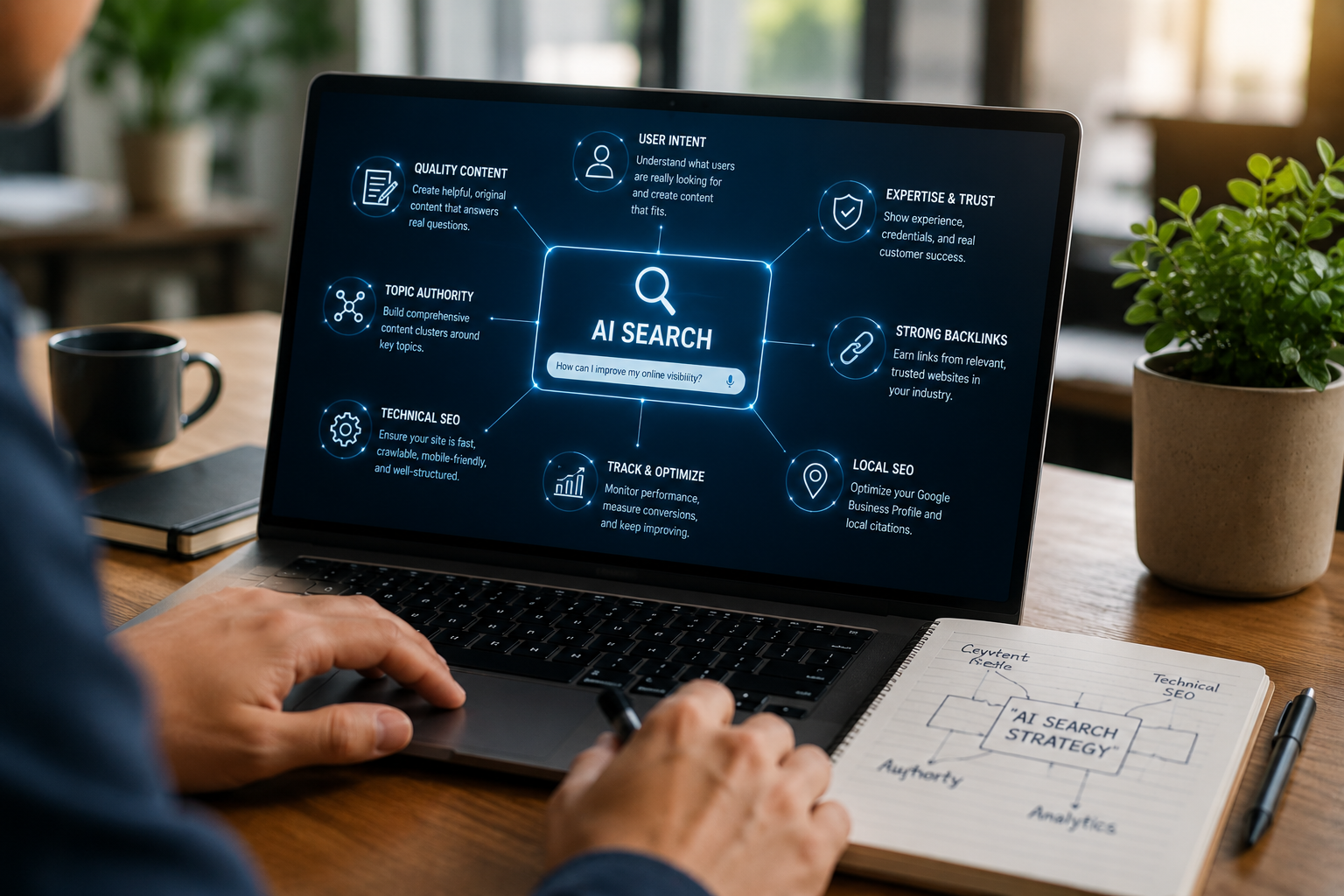
The best AI search strategy is not built around one tactic. It is built around a stronger digital foundation.
Here are the most important areas to focus on.
1. Strengthen Your Core Service Pages
Your service pages should do more than list what you offer. They should explain the problem, the service, the process, the benefits, and the next step.
A strong service page should answer questions like:
What does this service include?
Who is this service best for?
What problems does it solve?
How does the process work?
What makes your company qualified?
What should the customer do next?
This helps both users and search engines understand the page. It also gives AI systems clearer information to reference when people ask service-based questions.
2. Build Topic Clusters Around Real Customer Questions
Topic clusters help your website build authority around a subject. Instead of writing random blog posts, you create a connected group of pages around one important topic.
For example, a business focused on Google Ads could have content around:
How Google Ads works
Why Google Ads leads may be low quality
How conversion tracking affects campaign performance
What to do before increasing ad spend
How landing pages affect cost per lead
How AI automation is changing paid search
Each article supports the larger topic. Internal links connect the content together and help search engines understand the relationship between pages.
This is also useful for AI search because answer engines often look for clear, well-organized information across related topics.
3. Add Helpful FAQs to Important Pages
FAQs are useful because they match how people search. Many AI searches are phrased as questions, especially when users are comparing options or trying to understand a topic.
A good FAQ section should not be filled with random questions. It should answer real concerns clearly and directly.
For example:
What is AI search optimization?
How is AI SEO different from traditional SEO?
Can my business appear in Google AI Overviews?
Does local SEO still matter with AI search?
What type of content performs best in AI search?
These answers can help users quickly understand the topic and can also support AI search visibility.
4. Improve Technical SEO
AI search still depends on discoverable, crawlable, indexable content. If search engines cannot properly access your website, your content has a visibility problem before strategy even begins.
Technical SEO should include:
Clean URL structure
Proper headings
Internal linking
Fast page speed
Mobile-friendly layouts
Clear navigation
Indexable pages
Optimized title tags and meta descriptions
Image optimization
Schema markup where appropriate
Reduced duplicate content
Technical work is not always exciting, but it is necessary. A strong content strategy can underperform if the website has crawlability, indexation, speed, or structure problems.
That is why on-page SEO and website optimization should be part of any serious AI search strategy.
5. Build Authority Beyond Your Website
Your website is the foundation, but it is not the only signal that matters. Search engines and AI tools also look at the broader web to understand whether a business is credible.
This is where backlinks, guest posts, citations, reviews, and brand mentions can help.
A healthy authority strategy may include:
Quality backlinks from relevant websites
Guest blog placements
Consistent local citations
Google Business Profile optimization
Industry directory listings
Customer reviews
Case studies and testimonials
Helpful content that earns natural mentions
The goal is not to chase spammy links. The goal is to build a stronger online footprint that supports trust.
For businesses that need more authority, Orange SEO offers guest blogging services and citation building packages to support broader visibility.
What This Means for Google Ads and Paid Media
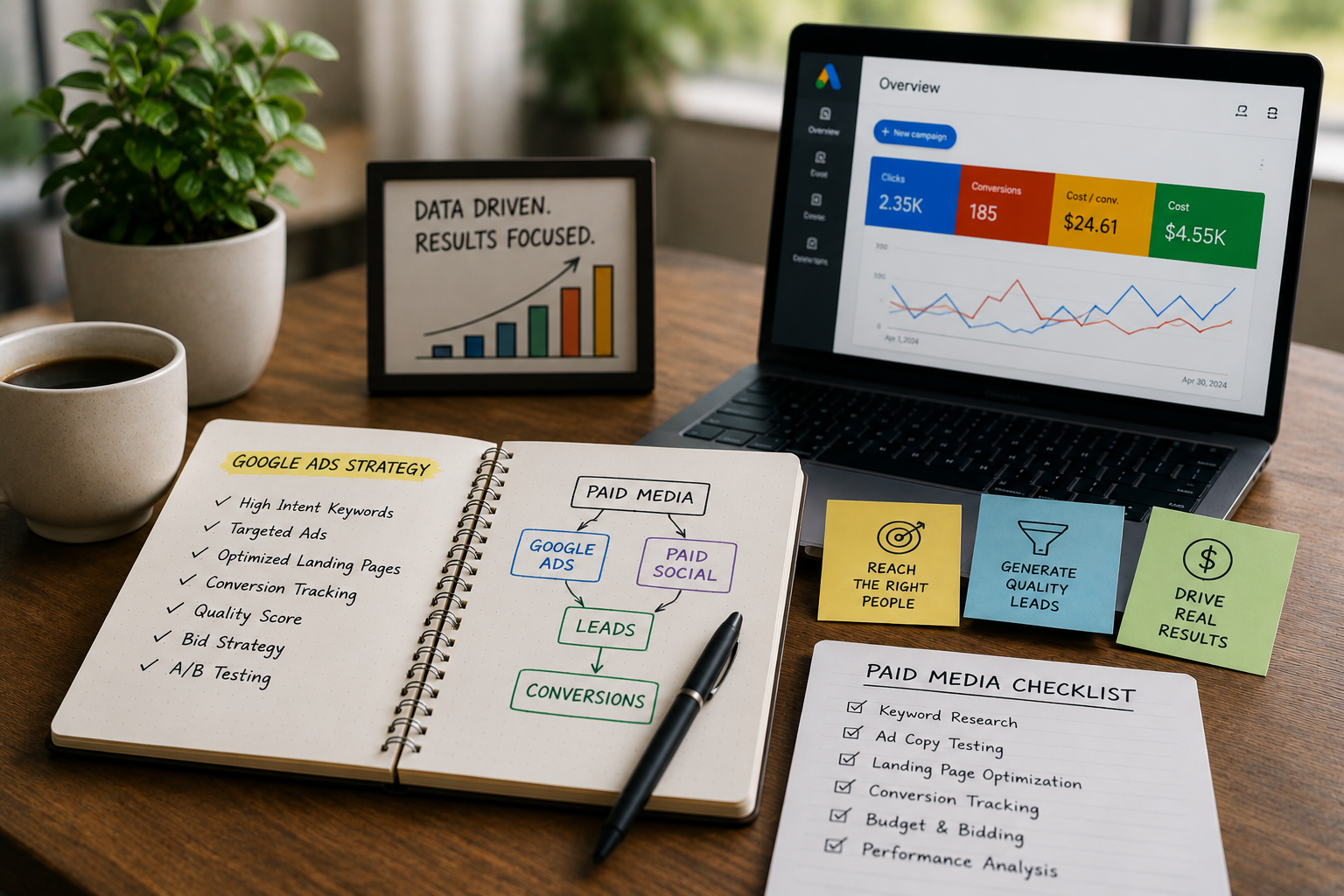
AI search is not only an SEO issue. It also affects paid media.
As organic search changes, businesses may see shifts in click behavior, search intent, and lead quality. Some users will research more before clicking. Others may come to a website with more context because AI already helped them understand their options.
This means paid media and SEO should work together.
For example, Google Ads campaigns can show which search terms are driving leads. SEO content can then be created around those same high-intent questions. Organic content can educate users before they convert. Paid ads can capture demand from people ready to act now.
The strongest digital marketing strategies are connected. SEO, Google Ads management, content, paid social, and conversion tracking should support the same business goals.
AI search makes that alignment even more important because businesses need to be visible across more touchpoints, not just one channel.
Why Lead Quality Matters More Than Traffic
In the old version of SEO, many businesses focused too much on traffic. More visitors looked good in reports, but traffic alone does not pay the bills.
AI search is forcing marketers to think more carefully about quality. If fewer people click because AI answers basic questions, then the clicks that do come through need to matter more.
That means your website should be built to attract and convert the right people, not just anyone.
A strong SEO strategy should help answer:
Are we attracting people who need our services?
Are users finding the right pages?
Are visitors taking meaningful action?
Are forms, calls, and tracking set up correctly?
Are leads turning into real opportunities?
Which content is influencing conversions?
This is where SEO and conversion strategy need to work together. Rankings are important, but they are only one part of the bigger picture. The goal is visibility that turns into qualified leads, sales opportunities, and revenue.
Common Mistakes Businesses Should Avoid
As AI search grows, many businesses will chase shortcuts. That usually leads to wasted time.
Here are the mistakes to avoid:
Creating thin AI-generated blog posts with no expert insight
Publishing content only for keywords instead of user intent
Ignoring technical SEO issues
Forgetting to update service pages
Using the same content across multiple location pages
Building low-quality backlinks
Ignoring Google Business Profile and local citations
Failing to track calls, forms, and lead quality
Treating AI SEO as separate from traditional SEO
Expecting instant results from content marketing
AI search does not remove the need for strategy. It makes strategy more important.
How to Prepare Your Website for the Future of Search
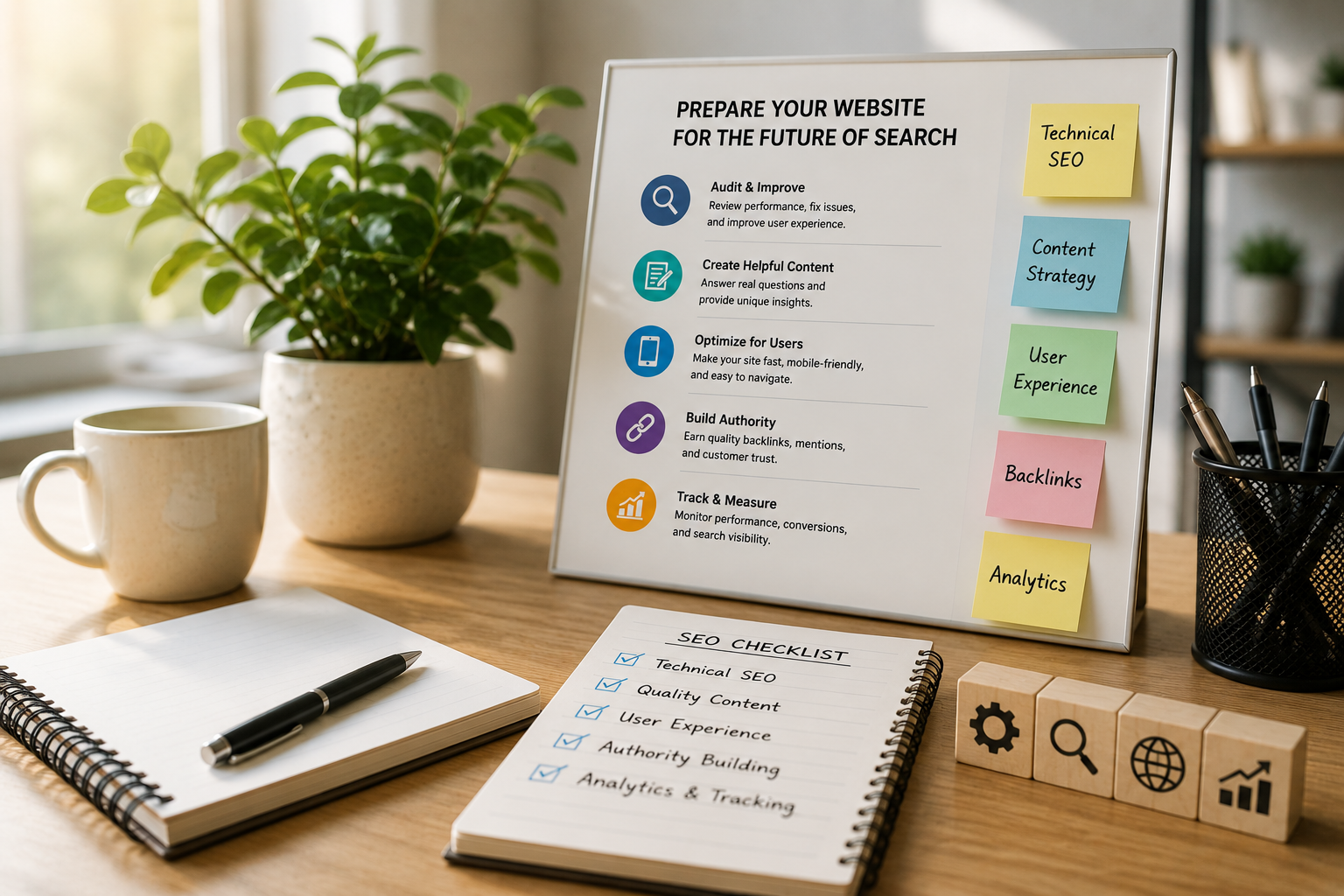
The best way to prepare for AI search is to make your website more useful, more specific, and easier to understand.
Start with these steps:
Audit your most important service pages.
Make sure each page clearly explains the service, the customer problem, the process, and the next step.Build content around real buyer questions.
Focus on questions people ask before they contact a business, compare providers, or make a purchase decision.Improve internal linking.
Connect related pages so users and search engines can easily move through your website.Update outdated content.
Refresh old blogs and service pages with better information, stronger examples, and more current insights.Strengthen trust signals.
Add reviews, testimonials, case studies, credentials, and clear business information.Fix technical SEO issues.
Make sure your site can be crawled, indexed, loaded quickly, and used easily on mobile devices.Track real conversions.
Measure phone calls, form fills, lead quality, and sales outcomes—not just traffic.
These steps help your website perform better in traditional search, AI search, and paid media campaigns.
Final Thoughts: The Future of SEO Is Trust
AI search is not the end of SEO. It is the next stage of SEO.
The businesses that win will be the ones that provide clear answers, demonstrate real expertise, build authority, and make it easy for users to take the next step. Generic content will become easier to ignore. Strong, specific, helpful content will become more valuable.
The main question is no longer just, “Can we rank?”
The better question is, “Can search engines, AI systems, and customers trust us as the best source?”
That is where SEO is heading.
Orange SEO helps businesses build stronger visibility through SEO strategy, AI search optimization, content creation, technical improvements, paid ads, and conversion-focused website updates. To learn more, visit our AI SEO services or explore how we support businesses with content creation, on-page SEO, and Google Ads management.
Stop Doing Generic SEO - Do This Instead Video:
FAQ: AI Search Optimization
What is AI search optimization?
AI search optimization is the process of improving your website so it can be found, understood, and referenced by AI-powered search tools such as Google AI Overviews, Google AI Mode, ChatGPT, Gemini, and other answer engines. It focuses on clear content, technical SEO, authority, trust, and user-focused answers.
Is SEO still important with AI search?
Yes. SEO is still important because AI search systems rely on web content, search indexes, and trusted sources to generate answers. The difference is that businesses now need stronger content, clearer structure, and better authority signals to compete in both traditional results and AI-powered answers.
How is AI SEO different from traditional SEO?
Traditional SEO focuses on rankings, keywords, crawlability, backlinks, and user experience. AI SEO includes those same fundamentals but also emphasizes answer-ready content, topic authority, entity clarity, expert insight, and content that AI systems can confidently summarize or reference.
Can my business appear in Google AI Overviews or AI Mode?
There is no guaranteed way to appear in Google AI Overviews or AI Mode. However, businesses can improve their chances by publishing helpful content, maintaining strong technical SEO, building authority, keeping business information accurate, and answering specific customer questions clearly.
What type of content works best for AI search?
The best content for AI search is specific, helpful, well-organized, and based on real expertise. Strong examples include service pages, comparison articles, FAQs, how-to guides, case studies, local landing pages, and blog posts that answer detailed customer questions.
Does my website still matter if AI gives users answers directly?
Yes. Your website still matters because AI tools need reliable sources to pull from. Your website is also where users go when they want deeper information, proof, pricing, examples, services, and a way to contact your business.
How can local businesses prepare for AI search?
Local businesses should keep their website, Google Business Profile, citations, reviews, service pages, and location information accurate and consistent. They should also create helpful local content that explains services, service areas, customer questions, and trust signals.
What is the first step in improving AI search visibility?
The first step is auditing your current website. Review your service pages, blog content, internal links, technical SEO, Google Business Profile, citations, backlinks, and conversion tracking. From there, create a strategy that improves both visibility and lead quality.