What Is AI Max for Search Campaigns? How Google Ads Automation Is Changing Paid Search
Paid search is changing fast. For years, Google Ads success depended on keyword research, match types, manual bidding, negative keywords, ad copy testing, and landing page optimization. Those fundamentals still matter, but Google is moving paid search toward a more AI-driven model.
One of the biggest examples of this shift is AI Max for Search campaigns.
AI Max is not just another small Google Ads setting. It represents a larger change in how search campaigns are managed. Instead of relying only on the exact keywords an advertiser selects, AI Max uses Google’s machine learning systems to understand search intent, expand reach, customize ad messaging, and send users to landing pages that may better match what they are looking for.
For business owners and marketers, this creates both opportunity and risk. AI Max can help uncover new search demand and improve campaign performance, but it can also waste budget if your tracking, website, and lead quality signals are not set up correctly.
That is why businesses need to understand how AI Max works before turning it on.
What Is AI Max for Search Campaigns?
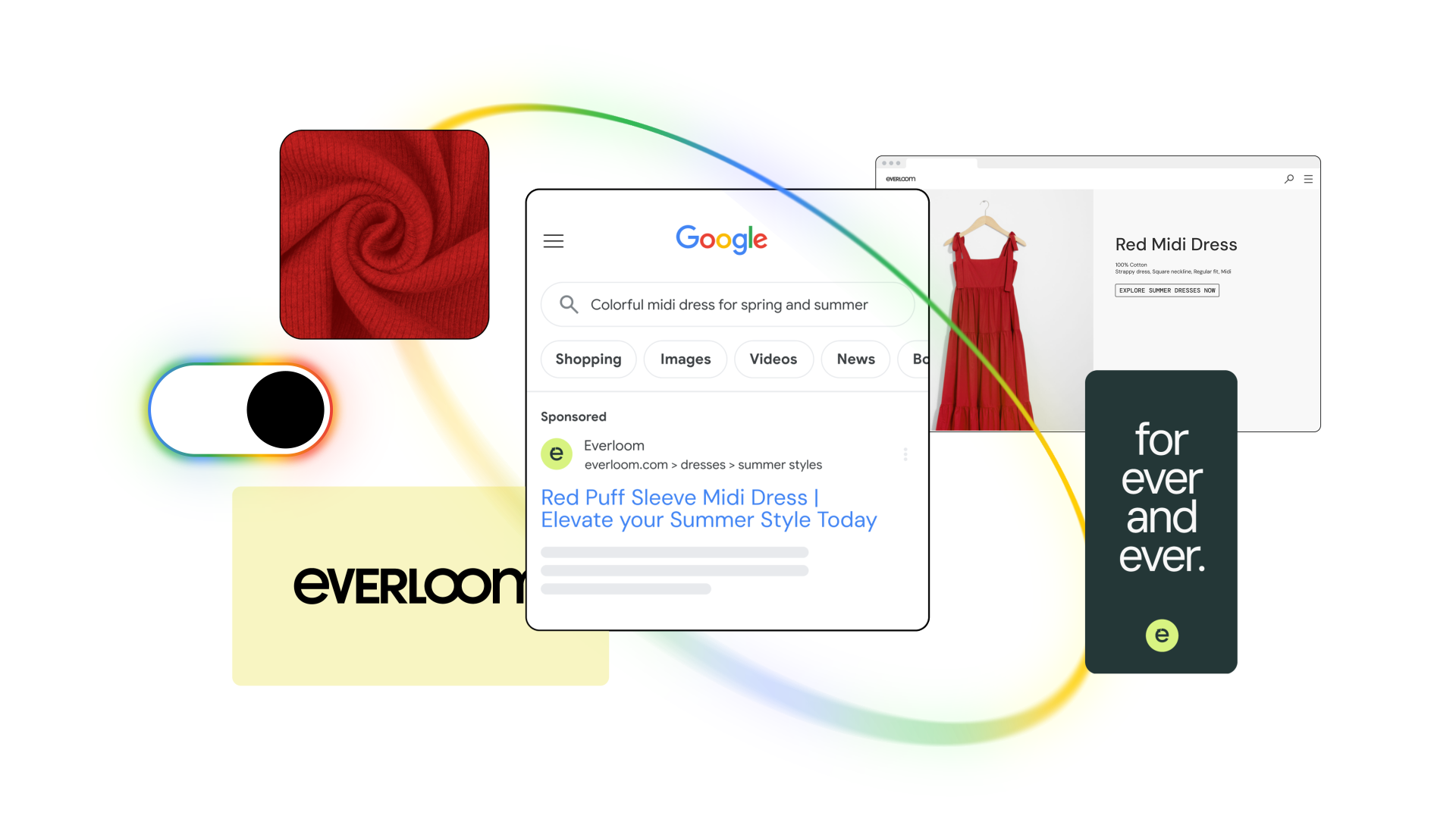
AI Max for Search campaigns is a Google Ads feature suite that adds AI-powered optimization to existing Search campaigns. It is not a separate campaign type like Performance Max. Instead, it works inside Search campaigns to help Google improve how ads are matched, written, and routed to landing pages.
In simple terms, AI Max gives Google more flexibility. Traditional Search campaigns are built around keywords. You choose the keywords you want to target, write ads around those keywords, and send users to selected landing pages. AI Max expands beyond that structure by using Google’s understanding of:
User search intent
Your website content
Campaign assets
Conversion goals
Landing page relevance
Historical performance data
The goal is to help advertisers show up for relevant searches they may not have manually added to the campaign.
For example, a business may target “Google Ads management,” but a potential customer may search “why am I spending money on ads but not getting good leads?” That search does not match a clean, traditional keyword perfectly, but it shows strong intent. AI Max is designed to help identify and capture more of those opportunities.
Why AI Max Matters for Businesses Running Google Ads
AI Max matters because Google Ads is becoming less keyword-controlled and more intent-driven. Keywords still matter, but Google is moving toward a model where AI interprets the meaning behind a search instead of only matching ads to a fixed keyword list.
This matters because search behavior has changed. People are asking longer, more specific questions. They are using voice search, AI search tools, and conversational queries. Instead of searching only for “PPC agency,” someone may search “how do I know if my Google Ads agency is wasting my budget?”
That type of search can be extremely valuable.
AI Max is important because it helps advertisers adapt to this new behavior by focusing on intent, not just keywords. It can help businesses:
Reach more long-tail search queries
Find new pockets of demand
Improve ad relevance
Match users with better landing pages
Reduce missed opportunities from limited keyword lists
Support more automated Google Ads management
At Orange SEO, this is why we view paid search as part of a larger digital strategy, not an isolated ad platform. Strong paid search management works better when it is supported by strong website content, better landing pages, and accurate lead tracking.
How AI Max Changes Keyword Targeting

The biggest shift with AI Max is how it expands keyword targeting. In traditional Search campaigns, advertisers choose keywords and match types. Exact match gives more control. Phrase match provides some flexibility. Broad match gives Google more room to interpret intent.
AI Max takes this further by using AI-powered search term matching to find relevant queries beyond the advertiser’s manually selected keyword list.
That can be helpful because customers often describe their problems differently than marketers expect. A business may know its service keywords, but real users search based on problems, questions, symptoms, comparisons, and pain points.
For example:
A dentist may target “dental implants,” but a patient may search “what can I do if I have missing teeth and hate dentures?”
A law firm may target “estate planning attorney,” but a user may search “how do I protect my house for my kids after I die?”
A marketing agency may target “Google Ads agency,” but a business owner may search “why are my paid ads getting leads that never answer the phone?”
A home service company may target “air duct cleaning,” but a homeowner may search “why does my house get dusty right after I clean?”
These searches may have real buying intent even if they do not look like traditional commercial keywords. AI Max can help campaigns discover more of this demand.
The key is oversight. AI can expand your reach, but you still need to monitor what it is doing. Advertisers should regularly review search terms, add exclusions, evaluate lead quality, and make sure the campaign is not drifting away from profitable intent.
How AI Max Impacts Ad Copy
AI Max can also help customize ad messaging based on what someone is searching for. Instead of only serving static headlines and descriptions, Google can use AI to adjust ad copy so it better matches the user’s intent.
This can improve performance because relevance is one of the biggest drivers of paid search results. When the search query, ad message, landing page, and offer all align, users are more likely to click and convert.
AI-powered ad customization may help with:
Matching ad copy to specific search intent
Improving click-through rate
Highlighting more relevant benefits
Testing different messaging angles faster
Reducing the need to manually write every possible ad variation
However, this also creates a new responsibility for advertisers. Your ad assets need to be strong. If you give Google weak headlines, vague descriptions, or generic messaging, the AI has less useful material to work with.
Your ad copy should clearly explain:
What service you offer
Who you help
What makes your business different
What problem you solve
What action the user should take next
AI can help customize ads, but it still needs strong source material.
How AI Max Uses Final URL Expansion
Another important AI Max feature is final URL expansion. This allows Google to send users to different pages on your website if the system believes another page is more relevant than the landing page originally selected.
In theory, this can improve performance. If someone searches for social media ads, Google may send them to a social media advertising page instead of a general marketing page. If someone searches for AI SEO services, Google may send them to an AI SEO page instead of your homepage.
This can be helpful when your website is well structured. But it can become a problem if your site has thin pages, outdated blog posts, irrelevant content, or pages that are not designed to convert.
Before using final URL expansion, businesses should review their website carefully. Every page that could receive paid traffic should have:
Clear service-focused content
A strong headline
Helpful supporting copy
Trust signals
Easy-to-find calls to action
Mobile-friendly design
Accurate conversion tracking
Content that matches search intent
This is where conversion-focused website development and landing page improvements become important. Paid search performance is not only about traffic. It is about what happens after someone lands on the website.
AI Max vs. Performance Max
Many advertisers may confuse AI Max with Performance Max because both use Google AI. However, they are not the same.
Performance Max is its own campaign type. It can serve ads across multiple Google channels, including Search, Display, YouTube, Discover, Gmail, and Maps. It is designed to maximize performance across Google’s full advertising network.
AI Max is different because it is tied specifically to Search campaigns. It enhances paid search by helping Google expand search matching, customize ads, and select more relevant landing pages.
Here is the simple difference:
AI Max: Used within Search campaigns to improve paid search performance.
Performance Max: A separate campaign type that runs across multiple Google channels.
Search campaigns: Still focused on users actively searching for a product, service, or solution.
Performance Max campaigns: Broader and more automated across multiple placements.
For many businesses, AI Max may feel like a more controlled step into automation because it keeps the focus on Search while adding more AI-driven flexibility.
The Biggest Benefits of AI Max for Search Campaigns

AI Max can be valuable when it is used with the right campaign structure, tracking, and website foundation. The biggest benefit is that it can help advertisers capture more relevant search demand without manually building every possible keyword variation.
The main benefits include:
Expanded reach: AI Max can help campaigns appear for relevant long-tail searches that may not be included in your keyword list.
Better intent matching: Google can look beyond the exact wording of a query and focus more on what the user is trying to accomplish.
More relevant ad copy: AI-powered customization can help ads better match the user’s search.
Improved landing page alignment: Final URL expansion can send users to pages that may better fit their query.
Faster testing: AI Max can help uncover new search patterns and messaging opportunities faster than manual campaign building.
More efficient campaign growth: Businesses may find new opportunities without constantly expanding keyword lists by hand.
For businesses with strong tracking and well-built landing pages, these benefits can be meaningful. AI Max can help scale what is already working and discover new areas of opportunity.
The Biggest Risks of AI Max
The biggest risk of AI Max is losing control over search intent. When Google has more flexibility, your campaign can reach more people, but not every new search will be valuable.
Some searches may be too informational. Some may be too broad. Some may attract people who are not ready to buy. Some may generate form fills or calls that look good in Google Ads but never become real customers.
The most common risks include:
Wasted spend on low-quality search terms
More conversions that do not turn into sales
Traffic going to weak or irrelevant website pages
Google optimizing toward the wrong conversion actions
Less visibility into why performance is changing
Overreliance on automation without human review
This is why first-party data matters. Businesses should not only track form fills and phone calls. They should track which leads became qualified opportunities, booked appointments, real patients, signed clients, or closed sales.
If you are not feeding lead quality data back into your marketing decisions, you may not know whether AI Max is actually helping. It may simply generate more activity without improving revenue.
This connects closely with our guide on how to improve lead quality from paid ads, because better data helps Google Ads optimize toward better outcomes.
Who Should Test AI Max?
AI Max is worth testing for businesses that already have a solid Google Ads foundation. It is not something every advertiser should turn on without preparation.
AI Max may be a good fit if your business already has:
Accurate conversion tracking
Enough campaign data for Google to learn from
Strong landing pages
Clear service pages
Quality ad copy
A clean campaign structure
A process for reviewing lead quality
A clear understanding of which leads are valuable
AI Max may also be useful for businesses in industries where people search in many different ways. This includes healthcare, home services, legal services, dental, ecommerce, B2B, and local service businesses.
However, businesses should be careful if their campaigns are already struggling with poor lead quality, unclear tracking, weak landing pages, or limited budgets. In those situations, turning on more automation may make the problem worse.
Before testing AI Max, fix the basics first. Make sure your conversion actions are accurate. Make sure spam leads are filtered. Make sure your landing pages match the services you want to promote. Make sure negative keywords are updated. Make sure you know which leads are actually valuable.
Automation works best when it is built on clean data.
How to Prepare Before Turning On AI Max
Before using AI Max, businesses should take time to review their Google Ads account and website. This does not need to be overly complicated, but it does need to be intentional.
Here is a practical checklist:
Review your current Search campaign structure.
Make sure campaigns are organized by service, location, or business goal.
Clean up conversion tracking.
Remove weak or misleading conversion actions.
Review your landing pages for relevance and quality.
Add clear calls to action on important pages.
Improve headlines and descriptions inside your ads.
Review negative keywords.
Make sure spam and irrelevant leads are being filtered.
Track lead quality after launch, not just total conversions.
The most important part is measurement. Do not judge AI Max only by clicks or conversions. Judge it by qualified leads, cost per qualified lead, booked appointments, sales opportunities, and revenue.
This is where a strong conversion rate optimization strategy can make a major difference. When your website converts better, every paid search campaign has a better chance of producing profitable results.
The Future of Google Ads Is AI-Assisted, Not AI-Only

AI Max is another sign that Google Ads is moving toward AI-assisted campaign management. The future of paid search will likely involve less manual keyword control and more reliance on intent signals, creative assets, landing page quality, audience behavior, and conversion data.
But that does not mean marketers are being replaced.
It means strategy becomes more important. Businesses still need someone to decide:
Which services should be promoted
Which locations are profitable
Which leads are worth paying for
Which search terms are irrelevant
Which landing pages need improvement
Which campaigns deserve more budget
Whether conversions are turning into revenue
AI can help expand reach and optimize delivery, but it does not fully understand your business. It does not know which leads waste your sales team’s time. It does not know which services have the highest profit margins. It does not know when a form submission looks good in Google Ads but never becomes a customer.
That human layer still matters.
The best results will come from combining Google’s automation with strong strategy, clean tracking, better landing pages, and ongoing optimization.
Final Thoughts
AI Max for Search campaigns is one of the most important paid search changes businesses should understand right now. It gives Google more power to match ads to search intent, customize messaging, and select landing pages. For the right business, that can create new opportunities for growth.
But AI Max is not magic.
It works best when your Google Ads account, website, tracking, and sales process are already built correctly. If your campaign is feeding Google poor data, AI may simply help you scale the wrong results faster.
Before turning on AI Max, businesses should ask:
Is our conversion tracking accurate?
Are our landing pages strong?
Do we know which leads are actually valuable?
Are we reviewing search terms and lead quality?
Do we have enough data for Google’s AI to make smart decisions?
Are we measuring revenue, not just conversions?
If the answer is yes, AI Max may be worth testing. If the answer is no, the first step is not more automation. The first step is building a stronger marketing foundation.
Orange SEO helps businesses manage smarter Google Ads and paid search campaigns by combining campaign strategy, conversion tracking, landing page improvements, and data-driven optimization. As Google Ads becomes more automated, businesses that understand both AI and strategy will have the advantage.
AI Max for Google Ads Video:
FAQ
What is AI Max for Search campaigns?
AI Max for Search campaigns is a Google Ads feature that adds AI-powered optimization to Search campaigns. It helps expand search term matching, customize ad messaging, and send users to landing pages that may better match their search intent.
Is AI Max a new Google Ads campaign type?
No. AI Max is not a separate campaign type. It is an optimization layer that can be used within existing Google Ads Search campaigns.
How does AI Max help Google Ads campaigns?
AI Max can help campaigns reach more relevant searches, especially long-tail queries that may not be included in a traditional keyword list. It can also help customize ad copy and improve landing page relevance.
Is AI Max the same as Performance Max?
No. Performance Max is a separate campaign type that can serve ads across multiple Google channels. AI Max is used within Search campaigns and focuses on improving paid search performance.
Should every business use AI Max?
Not every business should turn on AI Max immediately. It is best for businesses with accurate conversion tracking, strong landing pages, clear campaign structure, and enough data to support AI optimization.
Can AI Max improve lead quality?
AI Max can help improve lead quality if the campaign is built around accurate conversion tracking and strong landing pages. However, if a campaign is optimizing for low-quality leads, AI Max may generate more of the wrong type of conversions.
What should businesses do before using AI Max?
Before using AI Max, businesses should review their campaign structure, clean up conversion tracking, improve landing pages, update negative keywords, and make sure they can measure qualified leads instead of only total conversions.
Does AI Max replace keyword research?
No. Keyword research still matters. AI Max can expand beyond manually selected keywords, but businesses still need keyword research to understand demand, structure campaigns, write better ad copy, and evaluate search intent.