
How E-Commerce Sites Can Optimize for SEO, User Experience, and the New AI Era
In the fast-paced world of e-commerce, staying ahead of the curve means optimizing your online store for every channel through which customers might find you. Traditionally, that meant focusing on search engine optimization (SEO) and providing a great user experience (UX). Today, there's a new player in town: Large Language Models (LLMs) like ChatGPT and other AI-powered assistants. These AI tools are beginning to transform how people search for products and recommendations. This blog post will explore how you can optimize an e-commerce website not just for SEO and UX, but also for visibility in this emerging AI-driven landscape. We’ll take cues from the top e-commerce giants, discuss site structure best practices for LLMs, and provide actionable steps in a friendly, conversational tone.
The Top 3 E-Commerce Platforms (and What They Teach Us About SEO, UX, and LLM Optimization)
Before we get tactical, it’s important to ground this conversation in the reality of how most e-commerce sites are actually built. The overwhelming majority of online stores today run on one of three platforms:
Shopify
WooCommerce
Magento (Adobe Commerce)
Each of these platforms has different strengths, limitations, and optimization considerations when it comes to SEO, user experience, and visibility in AI-driven search and LLM responses. Understanding how each CMS works — and how search engines and AI models interpret them — is critical if you want to compete long-term.
Let’s break them down.
Shopify: Speed, Simplicity, and Structure (When Used Correctly)
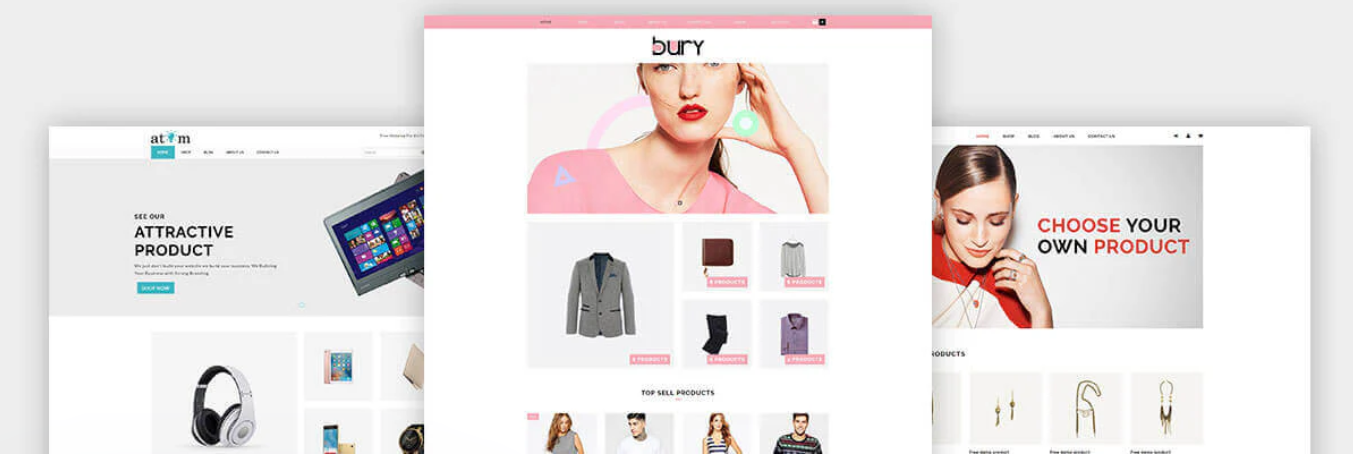
Shopify dominates the e-commerce landscape because it’s easy to launch, scalable, and relatively safe from technical SEO disasters. For many brands, Shopify is the fastest path to revenue — but it also comes with structural limitations that matter for SEO and LLM optimization.
SEO Strengths
Clean, fast hosting out of the box
Strong mobile performance
Automatic sitemap generation
Easy implementation of basic metadata
Reliable canonicalization (with some quirks)
SEO & UX Challenges
Limited control over URL structure (e.g.,
/collections/and/products/)Duplicate content risks across collections
Over-reliance on apps that slow performance
Thin product pages if merchants don’t customize content
LLM Optimization Considerations
Shopify sites tend to be highly structured but content-light, which is a problem for AI visibility.
LLMs favor:
Clear explanations
Contextual product information
FAQs and comparisons
Natural language answers to real questions
Most Shopify stores only include:
Short product descriptions
Bullet specs
Price and availability
That’s not enough.
How to Optimize Shopify for LLMs
Expand product descriptions into buyer-focused explanations, not just features
Add FAQ sections to product and collection pages
Create supporting blog content that links directly to products
Use schema (Product, FAQ, Review) consistently
Reduce dependency on JavaScript-only content that AI tools may not parse well
Shopify can absolutely perform well in AI-powered search — but only if you treat it as a content platform, not just a checkout system.
WooCommerce: Maximum Control, Maximum Responsibility
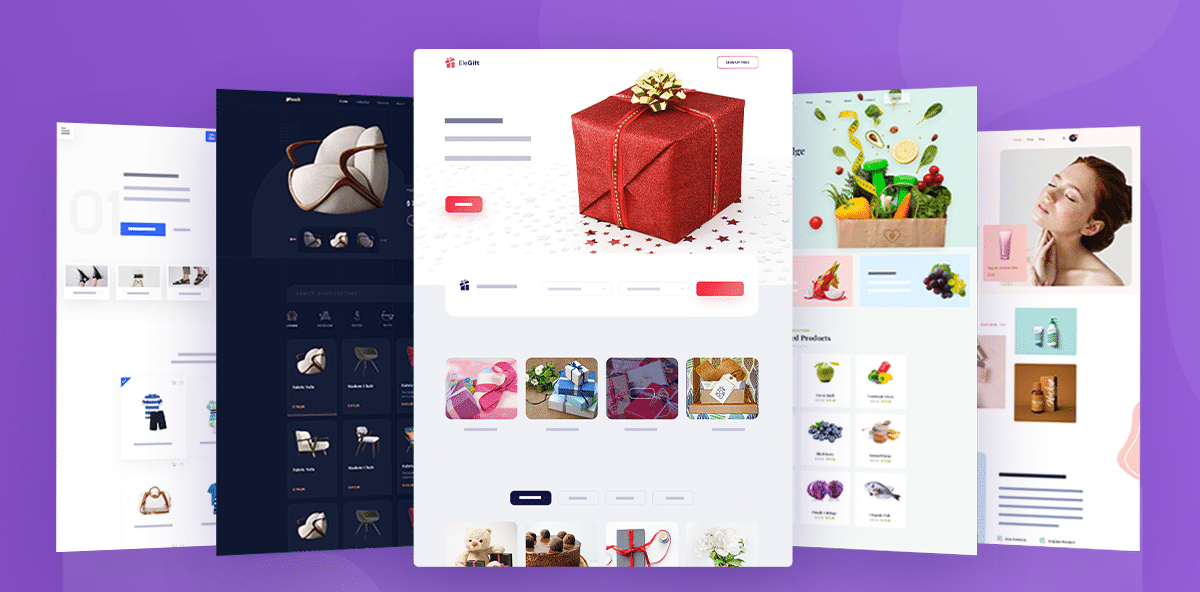
WooCommerce is built on WordPress, which makes it incredibly powerful — and incredibly easy to mess up.
When optimized correctly, WooCommerce sites can outperform almost any other platform in SEO and AI visibility. When neglected, they become bloated, slow, and inconsistent.
SEO Strengths
Full control over URLs, metadata, and taxonomy
Native blog + content integration
Excellent internal linking potential
Strong schema flexibility
Ideal for long-form and informational content
SEO & UX Challenges
Plugin overload causes speed issues
Poor theme choices lead to bad mobile UX
Inconsistent category and tag usage
Technical SEO issues if not managed properly
LLM Optimization Advantages
WooCommerce has a major advantage for LLMs: content depth.
Because it’s WordPress-based, WooCommerce sites can:
Blend editorial content with product pages
Publish in-depth guides, comparisons, and FAQs
Create topical authority across categories
Structure content using clean HTML and headings
This is exactly what LLMs want.
How to Optimize WooCommerce for LLMs
Build content hubs around product categories
Use blog posts to answer buyer questions and link to products
Add structured FAQs directly on product and category pages
Ensure schema is implemented cleanly (not via conflicting plugins)
Optimize for readability and clarity, not keyword stuffing
If your goal is to become a trusted source AI platforms reference, WooCommerce gives you the most flexibility — assuming you’re willing to manage it correctly.
Magento (Adobe Commerce): Enterprise Power with Enterprise Complexity
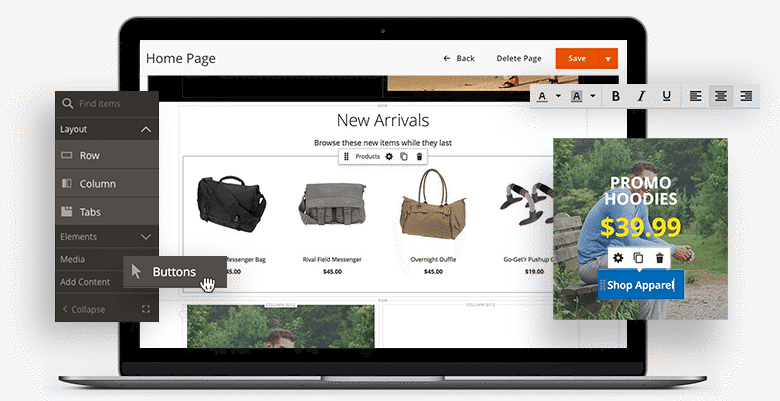
Magento is built for scale. Large catalogs, complex pricing rules, international storefronts, and advanced integrations are its bread and butter. However, that power comes with complexity — and complexity can be a double-edged sword for SEO and LLM visibility.
SEO Strengths
Highly customizable architecture
Strong handling of large catalogs
Advanced indexing and caching options
Robust multi-store and international SEO capabilities
SEO & UX Challenges
Requires experienced development teams
Performance issues if not optimized properly
Overly complex navigation can confuse users
Content creation is often an afterthought
LLM Optimization Challenges
Magento sites often struggle with LLM visibility not because of lack of data — but because of how the data is presented.
Common issues include:
Thin product descriptions
Heavy reliance on dynamic content
Poorly structured informational content
Minimal blog or educational resources
LLMs don’t care how complex your backend is. They care about clarity, structure, and usefulness.
How to Optimize Magento for LLMs
Invest heavily in content strategy, not just catalog management
Create dedicated informational pages tied to product categories
Implement FAQ and How-To schema wherever applicable
Simplify navigation and internal linking
Ensure important content is server-rendered and crawlable
Magento can dominate AI-driven visibility in competitive markets — but only when paired with a strong SEO and content strategy.
The Big Takeaway for E-Commerce Owners and Marketers
Your CMS does not determine success — how you use it does.
Shopify wins on speed and simplicity but needs deeper content
WooCommerce wins on flexibility and authority building
Magento wins on scale but demands intentional structure
From an LLM optimization perspective, all three platforms share one truth:
AI models reward clarity, structure, and helpfulness — not just technical perfection.
If your e-commerce site clearly explains:
What you sell
Who it’s for
Why it’s better
How it solves real problems
…you are already halfway to winning in SEO, UX, and AI-powered discovery.
SEO and User Experience: The Foundation You Can’t Ignore
Before diving into AI-specific strategies, it’s essential to get the basics right. SEO and user experience go hand in hand: a site that is well-optimized for search engines should also be pleasant for users to browse. Here are the foundational elements you should have in place:
Site Speed and Mobile Optimization: Online shoppers are impatient. A few extra seconds of load time can send potential buyers bouncing away. Search engines know this, too – Google uses site speed and mobile-friendliness as ranking factors. Ensure your site is optimized for performance: compress images, use fast hosting, and implement mobile-responsive design. A speedy, mobile-optimized site keeps users happy and improves your SEO ranking.
Clean Site Structure and Navigation: Think of your website’s structure as the skeleton that supports your SEO. Use logical categories and subcategories for your products. For example, a clothing store might have main categories like Men, Women, Kids, and then subcategories like Tops, Bottoms, Shoes, etc. Ensure every product is assigned to the right category, and use breadcrumb navigation so users (and Google) can see the hierarchy of your pages. Internal linking is also crucial: link from product pages to relevant category or blog pages and vice versa. A well-structured site makes it easier for search engine crawlers to index all your content, and it helps users effortlessly find what they need – a win-win for SEO and UX.
Unique and Detailed Content: One area where many e-commerce sites fall short is content. It’s not enough to copy-paste the manufacturer’s description for your products. To rank well and engage users, provide unique, detailed descriptions that highlight benefits and answer common questions. Think about what information a customer would want before buying – dimensions, materials, how to use the product, comparisons to alternatives, etc. Address these proactively on the product page. High-quality content keeps shoppers on your page longer (improving engagement metrics) and can include keywords and natural language that improve your search rankings. It also increases the chances that an AI, which looks for clear and informative answers, will find valuable info on your site. If you have a lot of products, this is admittedly a big task – so start with your most important items and build from there.
Meta Tags and Descriptive Titles: SEO 101 still matters. Craft unique, descriptive title tags and meta descriptions for each key page. These tags should include relevant keywords but also read in a compelling, human way (to encourage clicks). For example, instead of a title like "Buy Shoes Online – XYZ Store," use something more specific and enticing like "Running Shoes for All Terrains – Lightweight & Durable | XYZ Store". Good titles help search engines understand the page and increase your click-through rate from the results page. The meta description can be thought of as a mini advertisement for the page – summarize the content or offer and include a call-to-action if possible. While meta tags themselves aren’t directly used by LLMs, they contribute to overall SEO health, which indirectly affects everything.
User Reviews and Ratings: Incorporating customer reviews and ratings on your site provides social proof for shoppers and extra content for search engines to chew on. Reviews often contain keywords (like product names or use-cases) and natural language descriptions of your products. This user-generated content can improve your SEO by increasing content freshness and relevance. Additionally, having a healthy number of good reviews builds trust – both Google and potential buyers see your site as more credible. For UX, the ability to read authentic feedback can significantly improve a customer’s confidence in making a purchase. Some e-commerce platforms allow a Q&A section where customers ask questions about a product and store owners or other customers answer. If possible, enable this! It directly addresses potential buyers’ questions (reducing doubts that block a sale), and that Q&A content might align with long-tail search queries or even questions posed to an AI assistant.
Trust Signals and Security: Users care about privacy and security. Make sure your site is secure (running on HTTPS), and display trust badges, clear return policies, and customer support info. While these might not impact SEO directly, they improve conversion rates. Plus, a well-regarded site (with good user engagement and low bounce rates) sends positive signals to search ranking algorithms. Think of UX elements like easy checkout, multiple payment options, and accessible customer service as part of your optimization strategy – happy customers lead to better word-of-mouth and possibly better reviews on external sites, which can all circle back into better SEO.
By solidifying these foundation pieces, you not only improve your Google rankings and user retention today, but you also create a site that is structured and authoritative – qualities that will serve you well as we move into the era of AI-driven search.
Structuring Your Site for Better Visibility to LLMs
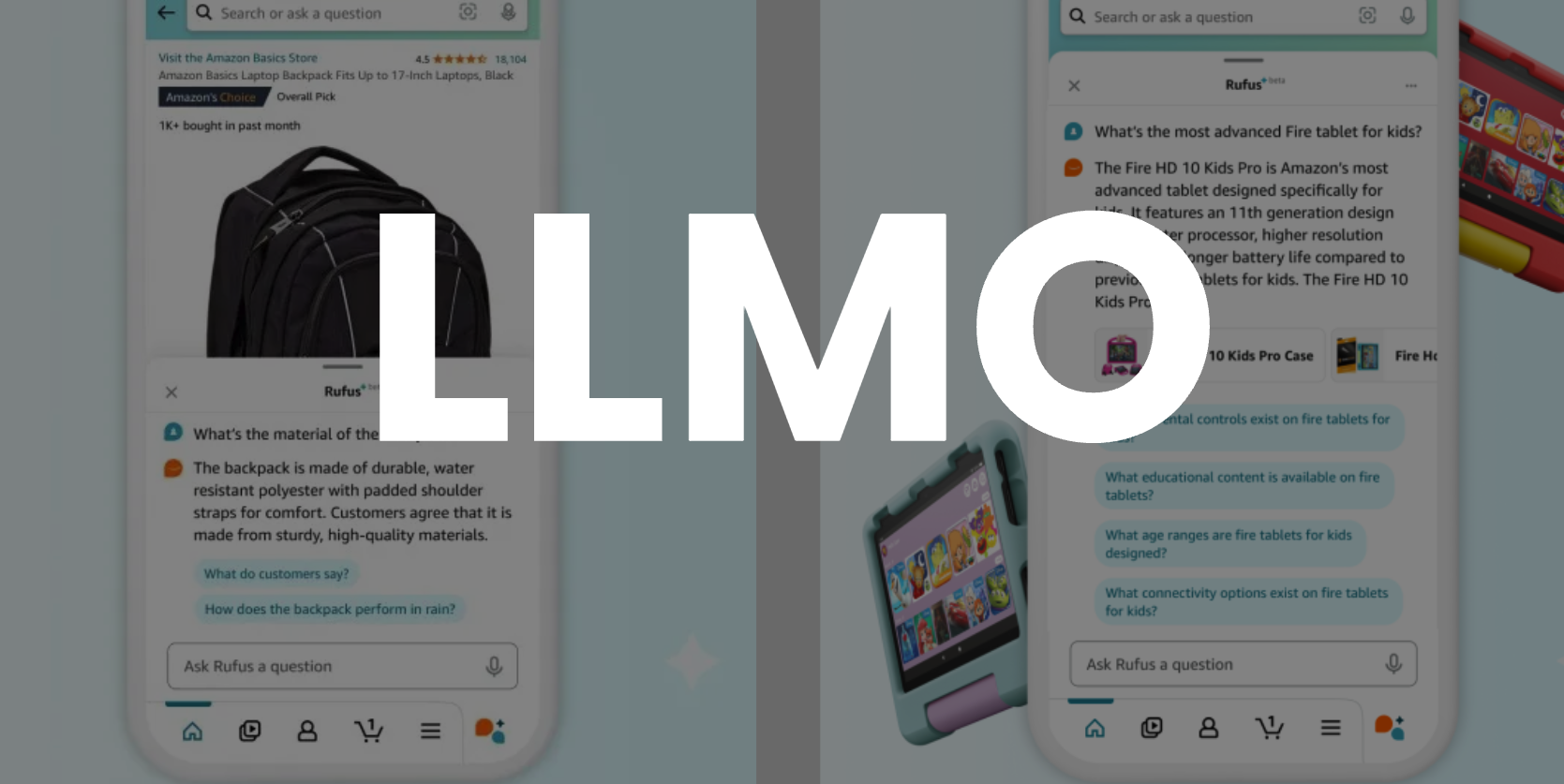
Now, let's get into the new frontier: making your e-commerce site LLM-friendly or also know as LLMO (Large Language Model Optimization). What does it mean to optimize for large language models? In simple terms, it's about ensuring that AI systems (like ChatGPT, Bing Chat, Google’s Bard, or other assistant tools) can easily access, interpret, and trust the information on your site. These models might not "crawl" the web exactly like Googlebot does, but they learn from vast amounts of content and often pull in snippets from web pages to formulate answers. Here’s how to structure and tweak your site to stand out for AI:
Ensure Content is Crawlable and Accessible: If your site content is hidden behind logins or requires heavy scripts to load, both search engines and AI models will struggle to access it. Use standard, crawlable HTML for essential content. Avoid disallowing important pages via
robots.txt. For instance, if you have a knowledge base or blog with valuable tips, make sure it’s open to be indexed. LLMs often use data that was publicly available during their training or via real-time search integrations. If your content can’t be seen by a regular web crawler, it’s as good as invisible to an AI. A practical tip is to perform a "site:" search on Google for your domain and key pages – if Google can find and index those pages, it’s likely AI can access them too.Use Semantic HTML and Clear Structure: The way you code and organize your content on each page matters. Use proper heading tags (H1 for the page title, H2 for sections, H3 for subsections, etc.) to create a logical outline of your content. When you present information in bullet points or numbered steps, use actual list tags (
<ul>,<ol>with<li>). This semantic structure helps search engines understand the hierarchy of information, and it similarly helps AI models parse your content more accurately. Imagine an AI trying to extract an answer from your page – if your answer is buried in a huge wall of text, it might get ignored or misunderstood. Instead, if you structure content in a question-and-answer format or clearly delineated sections, you increase the odds of the AI picking it up correctly. For example, if you run a cookware store and have a blog post titled "How to Choose the Best Non-Stick Pan", structure it with headings like "What to Look for in a Non-Stick Pan", "Top Materials Compared", and "Our Top Picks for 2025". Under each, use concise paragraphs or lists. This not only boosts human readability but also makes it easy for an AI to identify key points and potentially quote them.Leverage Schema Markup (Structured Data): One powerful way to communicate with both search engines and AI is by using structured data markup (such as schema.org vocabulary in JSON-LD format). For e-commerce sites, at minimum you should implement Product schema on your product pages, which can include details like price, availability, brand, and aggregate rating. This markup makes it crystal clear what each data point on your page means. The immediate benefit is richer search results (for instance, Google can display star ratings or price info directly in the search snippet). The side benefit for LLMs: they often tap into knowledge graphs and structured databases that digest this schema data. Additionally, consider using FAQ schema for pages that have a Q&A format. If you have a FAQ page or even a product page with common questions listed, marking them up with FAQ schema means Google may feature them, and an AI might also more readily pull that Q&A as a trustworthy source. The goal is to speak the language of machines without sacrificing human-friendly content. By adding schema markup to your HTML, you’re essentially giving AI a roadmap to your content.
Create FAQ and How-To Content: Think about the types of questions your target customers might ask, whether via a traditional search or directly to an AI assistant. Examples might be: "What’s the best running shoe for flat feet?", "How do I install a kitchen faucet?", or "Which laptop is good for graphic design under $1000?". If you have products related to these questions, you should have content that answers them. This could be in the form of an FAQ section on a category page, a detailed how-to guide or tutorial, or a blog post that addresses the question. Not only do these serve as great SEO content (potential to rank for long-tail keywords and get featured snippets), but they are exactly the kind of conversational queries an LLM would field. When you structure the content in a question-and-answer format, you make it easy for the AI to extract the answer. For instance, on a product page for a blender, you might add an FAQ like "Q: Can this blender crush ice? A: Yes, this blender is powerful enough to crush ice thanks to its 1000W motor." If a user asks an AI "Can the XYZ Blender crush ice?", there’s a chance the AI will confidently respond with the information directly from your page. The key is to answer plainly and helpfully, as if you were talking to the customer.
Build Topical Authority with Content Clusters: LLMs, much like search engines, favor content from sites that appear to be experts or authorities on a given topic. One way to signal this is by creating content clusters. Pick themes related to your niche and produce a cluster of interlinked content covering various subtopics. For example, if you sell organic skincare products, create a series of articles or guides around "skincare routines", "natural ingredients benefits", "seasonal skin care tips", "how to choose the right product for your skin type", etc., all linking to each other and to your product pages where relevant. This not only helps human readers navigate all the great info you’re providing, but it also shows an AI that your site has depth on the subject. A single blog post about skincare is good, but ten well-written, interconnected posts along with product recommendations is a hub of knowledge. If an AI is answering a broad question about your topic, it may prefer to reference a site that has demonstrated comprehensive coverage. Additionally, regularly updating these articles or adding new ones keeps your site content fresh – AI systems with access to current data (or those being retrained periodically) will notice that your info is up-to-date.
Establish Authority and Trustworthiness: Both Google’s algorithm and AI models have a concept of trusting certain sources more than others. As an e-commerce business, you want to be seen as a trusted authority in your space. Part of this comes from the on-site elements we’ve discussed (detailed content, schema, etc.), but it also involves off-site signals. Encourage happy customers to leave reviews on third-party platforms (Google Reviews, Trustpilot, industry-specific review sites) – a strong positive reputation across the web can indirectly boost your authority. Another tip is to secure mentions or features on reputable websites or news outlets. If, for example, a popular tech blog or a local news site features your business or products, make sure to highlight that on your site (e.g., "As seen in TechCrunch" or "Featured in The New York Times") with maybe a blurb or logo. These kinds of trust signals can be picked up by AI, especially if the AI is scanning multiple sources. Some advanced AI-based search experiences cite their sources. If your brand or product gets cited often by others, an AI is more likely to consider it in its answers. Backlinks from high-quality sites still matter – not just for traditional SEO, but as a proxy of credibility that AI might notice via the content it was trained on. In short, do the sort of PR and outreach that gets your name onto authoritative web pages. The more context and connections the AI can find about your business, the more confidently it can recommend you.
Experiment with Emerging Tools (LLMs.txt): As AI becomes more ingrained in search, tech companies are devising new protocols to manage how content is used. One recent concept is an LLMs.txt file (inspired by the familiar robots.txt for search engines). It’s not an official standard yet, but some early adopters are placing an
llms.txtfile on their site to indicate permissions or preferences for AI crawlers – basically telling AI agents what they can or cannot use from the site. This is very much an experimental area at the time of writing. However, staying aware of it is wise. Adding an LLMs.txt file in the future could be as simple as listing which parts of your site you want to share with AI models. For now, focus on the concrete steps we know work (like schema and content), but keep an eye on developments in this space. Adopting new standards early can sometimes give you a competitive edge.Monitor Your Presence in AI Outputs: Lastly, how do you know if these efforts are working for LLM visibility? You can actively test AI search results. Try asking ChatGPT (with browsing enabled, if you have that feature) something related to your niche that your site could answer. See if your site is mentioned or if the answers sound like they could be coming from your content. Tools like Perplexity.ai (an AI search engine) explicitly show citations for their answers – search for your brand or product names there and see if it’s pulling info from your site. If not, analyze which sources are being cited and consider how you might get included there (maybe those are blogs or forums you should be listed on). You might discover, for example, that a question like "best budget gaming chair" never surfaces your brand’s chair, while citing a popular review blog. That could be a sign you need to get your product reviewed on that blog or improve your own site’s content for that query. The point is, start treating AI results a bit like you treat Google results – another place to audit your digital visibility.
Beyond SEO: Marketing in the Conversational AI Age

One thing that stands out about AI-driven interactions is how conversational they are. Instead of typing a few keywords, people might ask a whole question or even have a back-and-forth dialogue with an assistant. This shift means that your marketing and content tone can also be more conversational and customer-centric. Here’s how to align your marketing approach with the AI era:
Adopt a Conversational Tone in Content: Review the copy on your site – from product descriptions to blog posts – and ensure it doesn’t sound too robotic or jargon-heavy. Aim for a tone that is friendly, clear, and relatable (while still professional). If someone asks an AI, "What does this gadget actually do and is it easy to use?" and the AI pulls a snippet from your product description, you’d want it to read like a helpful salesperson is speaking. For example, instead of "Product X features a 2500mAh battery enabling 5V output," you might say "Product X has a long-lasting battery (2500mAh) that can easily charge your phone or tablet, so you’re never caught without power on the go." This way, if an AI quotes you, the information makes sense to the average person. A conversational tone also improves regular UX – it feels more engaging to read and builds a connection with the customer.
Anticipate Customer Questions in Your Copy: Good marketers have always tried to get into the customer’s head and answer objections or questions proactively. With AI, this becomes even more crucial. Take a Q&A approach to marketing copy. Think about the top 5-10 questions a hesitant customer might have about your product or service. Then ensure those questions are answered clearly on your site, either in an FAQ section, as part of the product description, or in a blog post. For instance, if you sell a high-end coffee maker, questions could be "Is it hard to clean?", "Does it work with espresso beans?", "What’s the warranty?". By answering these openly, you not only help the person reading your site, but you also create content that an AI might serve up to someone asking the same things. It’s like having a friendly conversation with your customer, both directly and through the proxy of an AI assistant.
Use Storytelling and Examples: Marketing-oriented content that resonates often includes brief stories, examples, or use-cases. This makes your content richer and more likely to be referenced. For example, an AI might incorporate an anecdote from your blog if it’s illustrating a point. You could write something like, "One of our customers, a marathon runner, found that our hydration pack reduced her race finish times by keeping her perfectly hydrated without slowing down. She loved the hands-free design that let her focus on running." A detail like that, if relevant to a query, could get picked up by an AI. Plus, storytelling keeps real readers engaged longer and appeals to their emotions – a core marketing win.
Stay Authentic and On-Brand: In the rush to optimize for algorithms and AI, don’t lose your brand’s unique voice. Being conversational doesn’t mean being generic. Whether your brand voice is humorous, compassionate, authoritative, or quirky, keep it consistent. AI models often mirror the tone of the content they ingest; if your brand voice is distinctive and human, that can shine through even if an assistant paraphrases your info. The result? A potential customer might hear an answer from an AI and find it compelling or trustworthy without even realizing your brand was behind it. Then when they click through to your site (or when the AI tells them the source), there’s a seamless consistency in tone. In marketing, that consistency helps build recognition and trust.
In essence, marketing for the AI age means doubling down on being customer-centric. It’s about providing genuine value, clear answers, and a personable touch in all your content. If you do that, you’re not only optimizing for better conversions and SEO; you’re crafting the kind of content that AIs will naturally gravitate towards as well.
Conclusion
The world of e-commerce optimization is expanding. It’s no longer just about appeasing Google’s algorithm or providing a smooth on-site experience – now we’re also looking at how to become the go-to answer for AI-powered tools that millions of people will use in the coming years. The exciting part is that these goals are aligned. By focusing on clarity, structure, and authority, you simultaneously improve SEO, UX, and your appeal to LLMs.
Think of this holistic optimization as preparing your online store for every customer journey: the one that starts with a Google search, the one that begins with a voice query to a smart speaker, or the one that involves a user asking ChatGPT for a recommendation. In all cases, you want your site to be the one that’s found, trusted, and presented as the answer.
Even as new technologies emerge, the core principle remains: Put the customer first. If your site is fast, easy to use, full of genuinely useful information, and trustworthy, you’ve built a strong foundation. Now, by adding these new AI-focused techniques – structured data, conversational content, multi-channel presence – you ensure that foundation is visible in the next generation of search results.
E-commerce companies and digital marketers who embrace these changes early will have a head start. It’s a learning process for everyone, but the potential upside is huge. Imagine being one of the first brands in your niche that an AI assistant recommends unprompted – that’s like winning a new type of search ranking before your competitors even know it exists.
In summary, optimize broadly and optimize smartly. The future of e-commerce search is unfolding, and your store can shine in it by blending classic SEO/UX best practices with forward-thinking AI strategies. Happy optimizing!
Stop Chasing Keywords: Top AI SEO Moves for Ecommerce Websites:
FAQ: E-Commerce SEO, UX, and LLM Optimization
What does it mean to optimize an ecommerce website for LLMs?
Optimizing an ecommerce website for LLMs means structuring content so AI systems can clearly understand products, categories, and buyer intent. This includes using clean HTML, structured data, FAQs, and plain-language explanations that AI tools can confidently reference when answering user questions.
Is optimizing for LLMs different from traditional SEO?
Yes, but they overlap. Traditional SEO focuses on rankings and keywords, while LLM optimization focuses on clarity, context, and answerability. A well-optimized site for LLMs still follows SEO best practices but places greater emphasis on structured content, FAQs, and natural language explanations.
Why are FAQs important for AI visibility?
FAQs directly mirror how users ask questions in AI tools. Well-written FAQs give LLMs ready-made answers they can extract, summarize, or cite, increasing the likelihood your site appears in AI-generated responses and overviews.
Which ecommerce platform is best for LLM optimization?
Shopify, WooCommerce, and Magento can all perform well for LLM optimization. WooCommerce offers the most content flexibility, Shopify offers strong structure and speed, and Magento excels at scale. Success depends more on content quality and structure than the platform itself.
How should product pages be structured for AI search?
Product pages should include descriptive headings, detailed explanations, clear benefits, FAQs, and structured data such as Product and Review schema. Pages that answer common buyer questions perform better in both AI results and traditional search.
Does schema markup help with AI Overviews?
Yes. Schema markup helps search engines and AI systems understand page context, product details, pricing, reviews, and FAQs. While schema does not guarantee AI inclusion, it significantly improves interpretability and trust.
Can blog content help ecommerce products appear in AI results?
Yes. Blog content builds topical authority and provides contextual answers that AI models rely on. Informational content that links directly to product pages increases the chances of both being referenced together in AI-generated responses.
Do LLMs prioritize brand authority?
Yes. LLMs favor content from sources that demonstrate expertise, clarity, and trust. Strong content depth, consistent messaging, reviews, and external mentions all contribute to higher perceived authority.
How do I know if my site is showing up in AI results?
You can test AI visibility by searching relevant questions in AI tools that provide citations or sources. If your content is not appearing, it often indicates a need for clearer structure, stronger topical coverage, or more authoritative content.
Is LLM optimization a one-time effort?
No. LLM optimization is ongoing. As AI models evolve and user behavior shifts toward conversational search, ecommerce sites must continuously improve content clarity, expand FAQs, and update product and category information.